Sep 26 , 2026
Coil-fed sheet metal automation improves continuous metal processing by integrating material feeding, leveling, punching, cutting, and downstream operations into a streamlined production system. Compared with traditional sheet processing methods that rely on manual loading and separate machines, automated coil-fed systems reduce material handling time, improve dimensional consistency, and enable manufacturers to achieve higher production efficiency with fewer interruptions.
For manufacturers producing high-volume metal components, coil-fed punching machines, an automatic sheet metal cutting machine, and a sheet metal coil cutting machine provide a more stable solution for continuous production. These systems help optimize raw material utilization, shorten production cycles, and support flexible manufacturing requirements across different industries.
Continuous production requires more than just faster machine operation. It depends on maintaining a stable workflow from raw material input to finished components. Coil-fed automation achieves this by allowing metal coils to be continuously processed without frequent manual repositioning or sheet loading.
A typical automated line includes coil feeding, straightening, punching, cutting, and part collection processes. By connecting these stages together, manufacturers can minimize idle time between operations and maintain consistent production speeds.
Unlike conventional sheet metal fabrication, where operators repeatedly load individual sheets, automated coil processing allows the material to move continuously through the production line. This reduces handling requirements and creates a more predictable manufacturing process.
Coil-fed punching machines are designed to process metal coils directly, making them highly suitable for applications that require large quantities of identical or customized components.
Traditional punching operations often require pre-cut sheets to be manually positioned before processing. This additional step increases labor requirements and introduces the possibility of alignment errors. Coil-fed punching systems eliminate much of this preparation by feeding the material automatically and maintaining accurate positioning throughout production.
For industries such as automotive components, electrical enclosures, appliances, and construction products, these machines provide advantages including:
Higher throughput for repetitive production
Improved punching accuracy
Reduced material handling
Better consistency between finished parts
The integration of automated feeding and punching also allows manufacturers to respond faster to changing production demands.
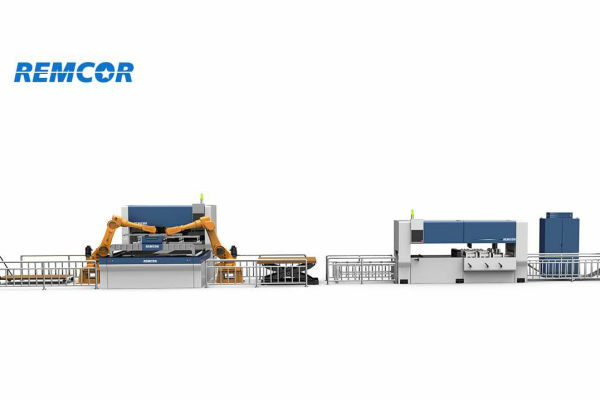
An automatic sheet metal cutting machine improves production efficiency by controlling cutting operations with greater precision and repeatability. When combined with coil-fed automation, it enables manufacturers to process long metal coils with optimized cutting patterns and reduced waste.
Material waste is a major concern in sheet metal manufacturing because inefficient cutting directly affects production costs. Automated cutting systems use accurate positioning and programmed parameters to ensure each cut follows the required specifications.
This is particularly valuable for manufacturers producing complex components where small dimensional differences can affect assembly performance. Automated cutting provides stable quality while reducing the need for manual adjustments during production.
A sheet metal coil cutting machine allows manufacturers to transform continuous coil materials into precisely sized metal sections according to production requirements.
Compared with manual cutting processes, coil cutting automation offers several operational benefits:
Continuous material processing without frequent stops
More consistent dimensions across large production batches
Reduced dependence on manual labor
Improved production planning and scheduling
For factories handling high-volume orders, maintaining consistent output quality is essential. Automated coil cutting ensures that each processed section meets predefined specifications, supporting smoother downstream operations such as bending, welding, and assembly.
Cost reduction in metal processing is not only achieved through faster machine speeds. It also comes from improving overall production efficiency.
Coil-fed automation reduces costs by minimizing several common manufacturing challenges:
First, automated material feeding reduces labor requirements associated with loading and repositioning sheets. Second, precise control reduces scrap caused by cutting or punching errors. Third, continuous operation allows factories to produce more parts within the same production timeframe.
For manufacturers facing increasing labor costs and demand for shorter delivery cycles, automated sheet metal processing provides a practical way to improve productivity without continuously expanding workforce requirements.
Modern manufacturers need production systems that can handle different product specifications while maintaining efficiency. Advanced coil-fed automation systems allow operators to adjust production parameters through programmable controls, making it easier to switch between different part designs.
This flexibility is especially important for industries producing customized metal components or handling frequent order changes. Instead of relying on separate machines for different processing steps, an integrated automation system creates a more adaptable production environment.
By combining feeding, punching, and cutting capabilities, manufacturers can achieve both high-volume output and production flexibility.
Consistency is one of the biggest advantages of automated metal processing. Manual operations may introduce variations caused by operator experience, fatigue, or positioning differences.
Automated systems maintain stable feeding speed, accurate positioning, and repeatable processing parameters. This helps ensure that every component meets the same quality requirements throughout long production runs.
For industries where precision and reliability are critical, improved process control reduces quality issues and supports more efficient inspection and assembly procedures.
Coil-fed sheet metal automation transforms continuous metal processing by creating a connected production workflow that improves efficiency, accuracy, and material utilization. Through technologies such as coil fed punching machines, an automatic sheet metal cutting machine, and a sheet metal coil cutting machine, manufacturers can reduce manual handling, increase production consistency, and achieve more competitive manufacturing performance.
As industries continue to demand faster delivery, lower production costs, and higher precision, automated coil processing systems are becoming an essential solution for modern sheet metal manufacturing.
Coil-fed automation can process various metal materials, including steel, stainless steel, aluminum, and other sheet metals used in industrial manufacturing.
The main benefit is continuous production with improved speed, accuracy, and reduced manual handling compared with traditional punching methods.
It improves efficiency by providing faster cutting speeds, consistent accuracy, and reduced material waste during production.
Yes. Modern automated systems can be configured for flexible production requirements, including customized and changing production orders.
Automated feeding and precise cutting control optimize material usage and minimize unnecessary scrap during processing.
This is the first one.
 English
 русский
 français
 Deutsch
 Español