Automated Metal Fabrication: How Laser Cutting Automation Is Transforming Manufacturing in 2026
Introduction
The manufacturing landscape is shifting fast. Labor costs are rising globally, skilled operator availability is shrinking, and competitive pressure demands higher throughput with tighter tolerances. For metal fabricators, the answer increasingly lies in **automated laser cutting and production systems**.
In this article, we explore what automated laser fabrication looks like in 2026, the business case for automation, and what to look for when evaluating fully integrated systems.
---
What Is Automated Laser Cutting?
Automated laser cutting goes beyond simply having a laser cutter with a CNC controller. True automation means:
- **Unattended material handling** — automatic loading of sheets or coils
- **In-line processing** — cutting, punching, forming, or bending as a continuous workflow
- **Automatic part sorting & stacking** — finished parts separated without manual intervention
- **24-hour operation capability** — lights-out production overnight or over weekends
- **System integration** — connected to ERP/MES systems for production tracking
The goal: **one operator oversees a system that would previously require 3–5 workers, running continuously without stops.**
---
Types of Automated Laser Systems
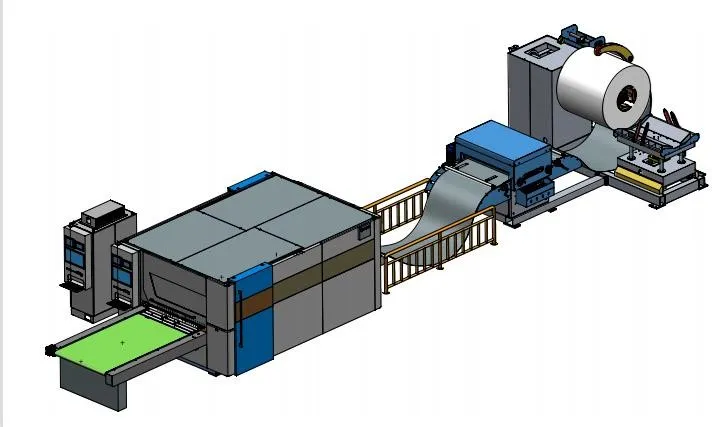
Instead of loading pre-cut sheets, these systems feed from a **master coil** of steel or aluminum. The workflow:
1. **Decoiling** — the coil is unwound from a mandrel
2. **Leveling** — the strip is straightened to remove coil set
3. **Feeding** — servo-driven rolls advance the strip to the laser zone
4. **Laser Cutting** — the cutting head executes programmed shapes directly from coil
5. **Part Removal** — finished parts drop or are conveyed away from the scrap skeleton
**Benefits of coil-fed systems:**
- Eliminate the cost and handling of pre-cut sheets
- Reduce material waste (coil stock is cheaper per kg than cut-to-length sheet)
- Enable truly continuous production — no loading interruptions
- Ideal for high-volume, repetitive part production
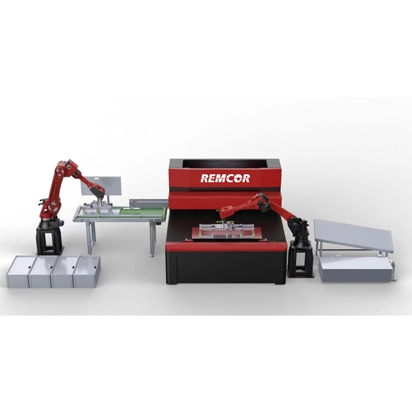
**Remcor Technology** manufactures complete coil-fed laser cutting lines capable of **24-hour unmanned operation**, integrating decoiling, leveling, punching, laser cutting, and part handling in a single system.
2. Sheet Metal Automated Loading/Unloading (AMADA-Style)
For fabricators working with cut-to-length sheets, automated loading systems use:
- **Tower storage systems** — multi-shelf storage holding dozens of sheet sizes
- **Pallet changers** — automatic swap of sheet pallets while the previous batch is cutting
- **Sheet lifters** — vacuum-based systems that pick individual sheets for loading
- **Automated sorting tables** — part stacking by program after cutting
This approach is ideal when production involves a wide variety of part shapes and materials.
3. Tube & Profile Laser Automation
For tube cutting, automation adds:
- **Bundle loaders** — automatically feed tubes from a pallet bundle
- **V-block conveyors** — support long tubes through the machine
- **Outfeed conveyors** — collect cut tube sections automatically
This transforms tube laser cutting from a 1-operator-per-machine operation into a 1-operator-per-3-machines scenario.
Combine turret punch presses with fiber laser cutting for parts that benefit from punched features (tabs, knockouts, formed features) alongside laser-cut profiles. These "punch-laser combos" are popular in electrical enclosure manufacturing and HVAC equipment production.
---
The Business Case for Laser Cutting Automation
Labor Cost Reduction
In virtually every major manufacturing market, labor costs have increased substantially:
- US manufacturing wages up significantly in the past 5 years
- European labor regulations increase per-worker costs beyond base wages
- Southeast Asian labor costs rising as the region industrializes
Automated laser systems reduce labor requirements by **50–80%** for the same output volume.
Throughput Improvement
A manually loaded laser system may run 16 effective cutting hours per day (two shifts). An automated system with buffer storage can run **22–24 hours**, increasing effective capacity by 37–50% without adding floor space.
Quality Consistency
Human loading introduces variation — sheets misaligned, material not fully flat, incorrect material loaded. Automated systems eliminate these error sources, improving first-pass yield and reducing scrap.
ROI Timeline
For many operations running 2+ shifts on laser cutting:
| Factor | Manual Operation | Automated System |
|--------|-----------------|-----------------|
| Labor (2 shift operators) | $80,000–$120,000/yr | Reduced to 1 part-time supervisor |
| Effective run hours/day | 14–16 hours | 20–24 hours |
| Throughput capacity | Baseline | +40–60% |
| Scrap rate | Moderate | Reduced |
**Typical ROI:** 18–36 months depending on application volume.
---
Key Industries Driving Laser Automation Adoption
Automotive & EV Manufacturing
The transition to electric vehicles has created massive new demand for precision-cut battery enclosures, structural components, and motor housings. High-volume, high-precision requirements make automation essential.
HVAC & Refrigeration Equipment
Thin-gauge sheet metal in high volumes — a perfect fit for coil-fed laser cutting with automated blanking.
Agricultural Machinery
Frame components, implement housings, and structural parts in medium-to-heavy gauge steel. Seasonal production peaks drive interest in maximum throughput during short windows.
Fitness & Sports Equipment
Steel tube frames for gym equipment, bicycles, and sports infrastructure — tube laser automation dramatically reduces per-unit production costs.
Metal Furniture & Office Equipment
Shelving, rack systems, office furniture components — high-mix/high-volume production favors flexible automated laser systems.
Structural Steel Fabrication
Plates, gussets, brackets, and connection elements — large-format automated cutting improves speed and reduces layout/marking labor.
---
Selecting an Automated Laser System: What to Evaluate
1. System Integration Capability
Can the manufacturer integrate all subsystems (coiler, leveler, feeder, laser, handling) from a single source? Single-source systems are easier to maintain and troubleshoot.
2. Control System Architecture
- Is it built on an open, industry-standard control platform?
- Can it interface with your ERP or MES system?
- Is remote monitoring and diagnostics available?
3. Material Handling Flexibility
- What material widths and thicknesses can the system handle?
- How quickly can it switch between different coil widths?
- How does it handle remnants and skeleton scrap?
4. Uptime & Reliability
- What is the published MTBF (mean time between failures)?
- What are the scheduled maintenance requirements?
- Are critical spare parts stocked locally?
5. Scalability
Can the system be upgraded later — higher laser power, additional modules, integration with downstream forming equipment?
6. Safety Systems
- Light curtains and safety interlocks on all hazardous zones
- Emergency stop accessibility throughout the line
- Fume extraction integrated or planned for
- CE/OSHA-compliant guarding
---
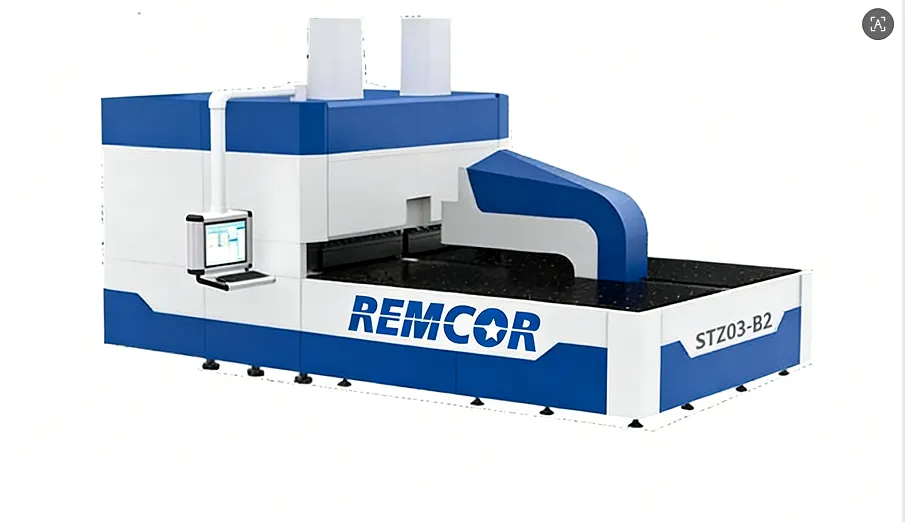
Remcor Technology's Automated Production Systems
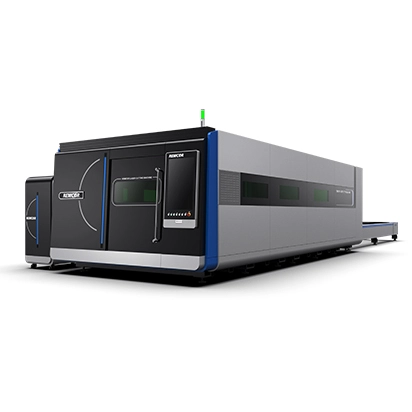
**Remcor Technology** has developed a range of integrated automated production systems for metal fabricators globally:
**Coil/Sheet Production Lines:**
- Decoil → Level → Feed → Punch → Laser Cut → Sort
- Capacity: handling up to 3mm–20mm thickness depending on configuration
- Laser power options: 3kW – 12kW fiber laser cutting heads
- Control: fully CNC-integrated with production management software
- Operation: designed for 24-hour unmanned production
**Key System Features:**
- ✅ In-house design and manufacturing of all major subsystems
- ✅ Custom line configurations to match specific product families
- ✅ Remote monitoring and diagnostic connectivity
- ✅ CE certified for European market deployment
- ✅ Global installation team for commissioning and training
- ✅ Installed in automotive, agricultural, HVAC, and structural steel facilities on 4 continents
---
The Path to Automation: Getting Started
Moving from manual to automated laser production doesn't have to be an all-or-nothing decision:
**Phase 1: Automate material handling on existing laser**
Add automated loading/unloading to your current laser cutter. Fastest ROI, lowest disruption.
**Phase 2: Add a second laser with full automation**
When capacity demands grow, invest in a fully automated system as a second machine.
**Phase 3: Full production line integration**
For high-volume producers, invest in a complete coil-fed or sheet-fed production line with integrated upstream and downstream processing.
Remcor's engineering team can help design the right automation roadmap for your specific production requirements.
---
Frequently Asked Questions
**Q: Do I need a dedicated engineer to run an automated laser line?**
A: After initial training, most automated laser lines can be operated and monitored by a single trained technician — even during overnight unmanned runs. The system alerts operators if intervention is required.
**Q: What is the minimum production volume to justify automation?**
A: It varies, but generally if you're running a laser cutter 2+ shifts per day, 5+ days per week, automation economics are compelling. A financial analysis with your actual labor costs and part volumes gives the clearest answer.
**Q: How long does it take to install and commission an automated system?**
A: A single-machine automation upgrade (auto load/unload): 3–7 days. A full coil-fed production line: 2–6 weeks for installation and commissioning.
**Q: Can existing laser machines be retrofitted with automation?**
A: Sometimes. It depends on the machine's physical layout and control system compatibility. Consult with the automation supplier with your machine's specifications.
**Q: What's the difference between "automation-ready" and fully automated?**
A: "Automation-ready" machines have physical and control-system provisions for future integration but no automation hardware installed yet. Fully automated systems include all material handling as a functional, integrated system.
---
Conclusion
Laser cutting automation is no longer a technology for Fortune 500 manufacturers only. In 2026, competitive mid-sized fabricators worldwide are implementing automated laser systems — and reaping the benefits of lower unit costs, higher throughput, and fewer labor headaches.
**Remcor Technology** designs and delivers complete automated laser cutting and fabrication solutions for manufacturers across industries and geographies.
**[Discuss Your Automation Requirements with Remcor Technology]


 English
 русский
 français
 Deutsch
 Español