Mar 12 , 2026
In the world of precision manufacturing, the bar feeder for CNC Swiss lathe is one of the most critical automation systems that determines machining efficiency, stability, and part quality. A CNC Swiss type lathe, also known as a Swiss automatic lathe or sliding headstock lathe, is specifically designed for machining small, long, and high-precision components. However, the performance of the machine is heavily dependent on how smoothly and accurately the bar material is supplied.
This is where a high-precision bar feeder system, especially an Oil Film Bar Feeder, plays a crucial role.
A CNC Swiss lathe bar feeder automatically feeds bar stock into the machine spindle, allowing the system to perform continuous, high-speed, and automated production. Without a reliable bar feeder, even the most advanced Swiss CNC machine cannot achieve its full productivity potential.
In modern CNC Swiss machining operations, the combination of a Swiss type lathe and a high-precision oil film bar feeder creates a low-friction, high-accuracy, and fully automated bar feeding solution, which is especially suitable for precision parts requiring superior surface finish, such as:
Optical components
High-precision shafts
Medical device parts
Aerospace connectors
Electronic micro components
This article explains why a bar feeder is the most important accessory for CNC Swiss lathes, how oil film bar feeders work, and why manufacturers across Europe and North America rely on them to achieve high efficiency Swiss machining production.
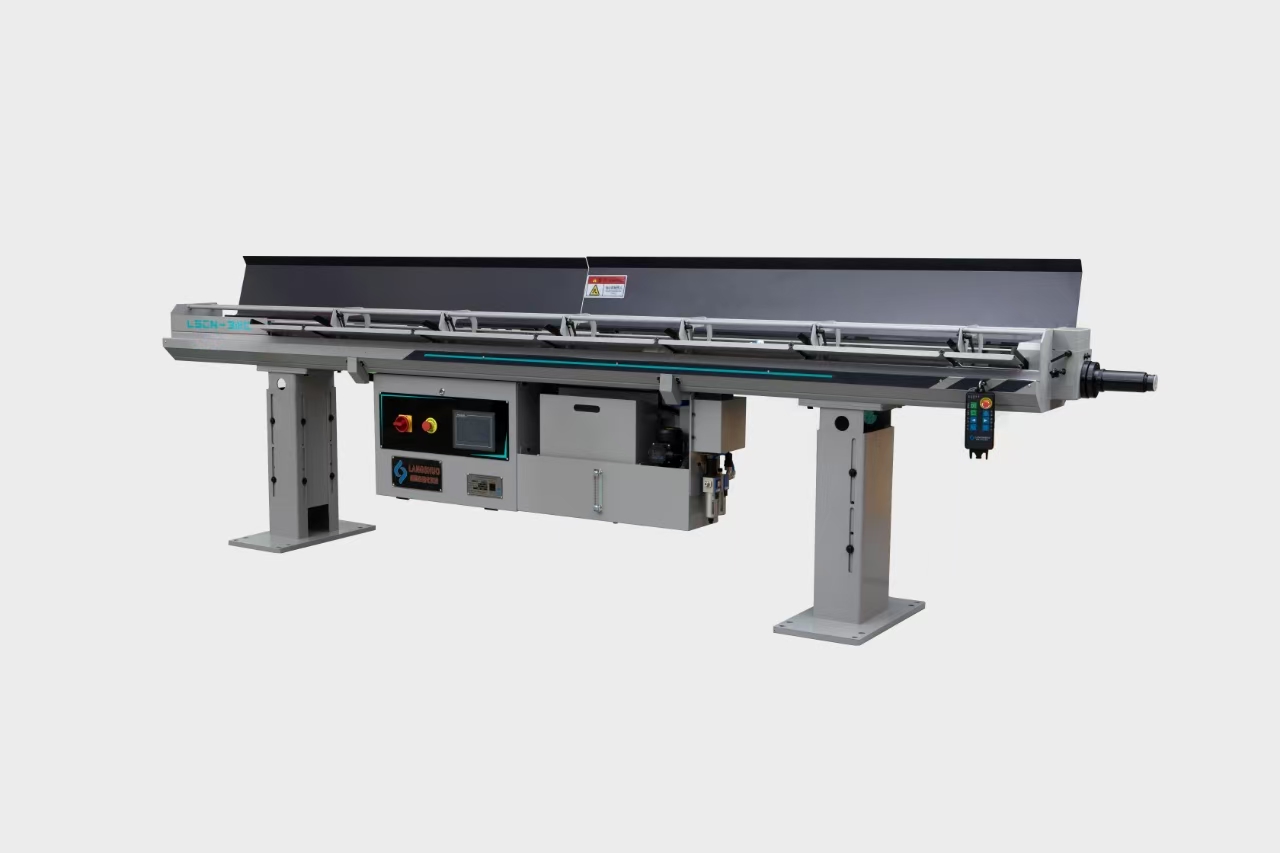
A bar feeder for CNC Swiss lathe is an automatic material feeding system that continuously pushes bar stock into the machine spindle during machining operations.
The main purpose of a Swiss lathe bar feeder is to ensure:
Continuous material supply
Stable feeding accuracy
Reduced operator intervention
Improved machining efficiency
Most CNC Swiss machining centers use bar stock with diameters ranging from 1mm to 32mm, depending on machine capacity.
Without a bar feeder, operators would need to:
Manually load each bar
Stop the machine frequently
Reposition the material
This would dramatically reduce the production efficiency of Swiss machining.
A high-quality automatic bar feeder allows 24-hour unmanned production, which is essential for modern precision machining workshops.
Among all accessories used in Swiss type CNC turning, the bar feeder system is considered the most important because it directly affects:
Production speed
Machining accuracy
Surface quality
Automation level
Manufacturing cost
The Swiss lathe itself performs the cutting, but the bar feeder ensures the machine runs continuously and smoothly.
Key benefits include:
Higher productivity
Reduced labor costs
Consistent part quality
Fully automated machining process
For manufacturers focused on high-volume precision parts production, the bar feeder is not optional—it is essential.
Among all bar feeding technologies, the Oil Film Bar Feeder is widely considered the highest precision bar feeding system for CNC Swiss lathes.
An oil film feeder uses a thin lubricating oil layer between the bar stock and the guide channel, reducing friction and preventing surface damage during feeding.
This technology is particularly important when machining high surface finish precision components.
Compared with conventional mechanical bar feeders, an oil film feeder offers:
Lower friction
Higher feeding accuracy
Better surface protection
Reduced vibration
This makes it ideal for precision Swiss machining applications.
A CNC Swiss lathe oil film feeder performs several critical functions that improve machining stability and productivity.
The oil film feeder uses a lubrication pump system to generate a thin oil layer between the bar stock and the feeding channel.
This oil film:
Reduces friction during bar feeding
Prevents scratches on the bar surface
Ensures smoother material movement
This feature is extremely important when machining stainless steel, titanium alloys, or polished materials.
For industries requiring mirror surface finish precision parts, oil film feeding is often the preferred solution.
An oil film bar feeder typically uses hydraulic or servo-controlled pushing systems to maintain stable feeding pressure.
Typical feeding pressure ranges from:
0.1 MPa to 0.5 MPa
Stable feeding pressure ensures:
Consistent material supply
No sudden feeding jumps
Higher machining stability
This is essential for high-precision Swiss lathe machining operations.
The oil film also acts as a cleaning medium, flushing small chips and debris away from the feeding channel.
This helps prevent:
contamination inside the spindle
bar feeding blockage
damage to the machine guide system
Maintaining a clean feeding channel is critical for ensuring long-term precision machining accuracy.
The synchronization between the bar feeder and the CNC Swiss lathe is essential for achieving high-precision machining.
Below is the typical working process.
Bar stock is first inserted into the guide sleeve of the oil film feeder.
The guide sleeve contains micro lubrication holes, which release oil to create the lubricating film.
This ensures the bar stock is fully supported and protected during feeding.
Typical Swiss machining bar diameters:
1mm – 20mm
sometimes up to 32mm depending on machine model.
After the Swiss lathe spindle clamps the bar, the bar feeder pushes the material forward according to the machining program.
The feeding accuracy can reach approximately:
±0.003 mm
This extremely high accuracy ensures consistent part dimensions in high-precision Swiss turning operations.
One of the most important technical points is synchronization between the Swiss lathe Z-axis and the bar feeder pushing speed.
The CNC system continuously adjusts the bar feeding motion to match the machine movement.
This prevents problems such as:
bar bending
slipping
unstable cutting
This synchronization is essential for maintaining high-precision Swiss machining performance.
During cutting operations such as:
CNC turning
micro drilling
threading
milling
tapping
the bar feeder maintains constant back pressure on the bar stock.
This prevents the material from moving backward due to cutting forces, ensuring stable machining conditions.
After machining operations, the oil used in the feeding system is automatically:
collected
filtered
recycled
Modern oil film bar feeder systems use closed-loop oil circulation systems, which help reduce oil consumption and maintain environmental efficiency.
Oil film bar feeders provide several major advantages in high-precision Swiss machining production.
Because the bar stock is separated from the guide channel by the oil film, there is no direct metal-to-metal contact.
This prevents:
scratches
surface marks
friction damage
This is especially important when machining optical parts, medical components, and polished shafts.
Oil film feeders perform extremely well when feeding very small diameter bars.
For example:
Bar diameter below 3 mm
Traditional mechanical feeders often struggle with such small materials, which can lead to:
deformation
feeding jams
vibration
Oil film feeding provides much higher stability.
Compared with traditional roller bar feeders, oil film feeding systems experience far less mechanical wear.
Wear reduction can reach over 80%, significantly increasing equipment lifespan.
Oil film feeders allow continuous long-bar machining, enabling Swiss lathes to operate for long periods without stopping.
This increases:
production efficiency
machine utilization rate
factory productivity
Modern oil film feeders use closed-loop lubrication systems, which recycle the oil and reduce waste.
This makes them more energy-efficient and environmentally friendly compared with older feeding technologies.
Oil Film Feeder
✔ No scratches on the bar surface
✔ High efficiency feeding
Traditional Mechanical Feeder
✖ Higher friction
✖ Possible surface damage
Oil Film Feeder
✔ Stable feeding for bars below 3mm
Traditional Mechanical Feeder
✖ Easy deformation
✖ Feeding instability
Oil Film Feeder
✔ Continuous automatic feeding
Traditional Mechanical Feeder
✖ Manual loading required frequently
To ensure optimal performance, several factors must be considered when implementing a CNC Swiss lathe bar feeder system.
Different materials require different lubrication oils.
Examples:
Copper alloys → low sulfur oil
Steel materials → higher viscosity oil
Proper oil selection ensures optimal lubrication performance.
A spindle sealing ring should be installed to prevent oil from entering the machining zone.
This protects the machine and ensures stable cutting conditions.
Some coated bar materials, such as PTFE-coated rods, may react with lubrication oils.
Testing is recommended before large-scale production.
In modern precision manufacturing, automation is essential for maintaining competitiveness.
A high-quality bar feeder allows manufacturers to achieve:
lights-out production
continuous machining
reduced labor costs
consistent part quality
For businesses operating CNC Swiss lathes, the bar feeder is not just an accessory—it is the foundation of automated precision machining.
The bar feeder is the most important automation system for CNC Swiss lathe machining.
By enabling continuous bar feeding, stable material support, and low-friction movement, it ensures that Swiss machines can achieve their full potential in high-precision manufacturing.
Among all bar feeding technologies, the oil film bar feeder stands out as one of the most advanced solutions, offering:
superior surface protection
higher feeding precision
improved stability for micro bars
longer equipment lifespan
higher production efficiency
For manufacturers in Europe and North America looking to improve Swiss machining productivity, investing in a high-precision bar feeder system is one of the most important decisions in building a high-performance CNC Swiss machining production line.
 English
 русский
 français
 Deutsch
 Español