Mar 13 , 2026
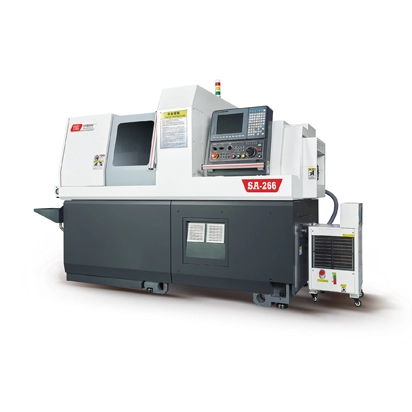
The control system of a CNC Swiss lathe is one of the most critical components that determines machining accuracy, machine stability, programming capability, automation level, and overall production efficiency.
In modern precision manufacturing, the CNC control system acts as the “brain” of the CNC Swiss lathe. It interprets machining programs, coordinates axis movements, controls servo motors, synchronizes spindle operations, and ensures precise machining processes.
For any CNC Swiss lathe manufacturer, selecting the right control system is essential to ensure stable performance and long-term reliability.
As a professional CNC Swiss lathe manufacturer, Remcor, we carefully evaluate different CNC control systems to provide the best solution for our global customers.
Currently, the most common CNC control systems used in the CNC Swiss lathe industry include:
FANUC CNC control system
Mitsubishi CNC control system
Syntec CNC control system
GSK CNC control system
Each CNC controller offers different advantages in terms of:
System stability
Multi-axis capability
Programming flexibility
Cost efficiency
After-sales service support
In addition, modern CNC Swiss lathes may use either single channel CNC control systems or double channel CNC control systems, which directly influence machining efficiency and multi-tasking capability.
This guide explains the main CNC Swiss lathe control systems, their differences, and how to choose the best control system for your machining needs.
A CNC control system manages and coordinates all movements and operations of the machine tool.
It reads G-code and M-code programs, then sends precise commands to:
Servo motors
Spindle drives
Tool slides
Auxiliary machine components
In a modern CNC Swiss lathe, the control system must manage many machine elements simultaneously, including:
Main spindle
Sub spindle
Tool slides
Live tooling units
Bar feeder system
Guide bushing system
High-pressure coolant system
High-end multi-axis CNC Swiss lathes may control 10 or more axes simultaneously, which requires a highly advanced CNC controller.
For this reason, choosing the correct CNC Swiss lathe control system is extremely important for achieving high precision machining and stable long-term production.
The FANUC CNC control system is widely recognized as the most popular and reliable CNC control system in the global machine tool industry.
Many high-end CNC Swiss lathes use FANUC systems because of their excellent stability, high precision control, and global technical support network.
Common FANUC models used in CNC Swiss lathes include:
FANUC 0i-TF
FANUC 31i
FANUC 32i
These systems are commonly used in Japanese and European CNC machines.
FANUC systems are well known for their stable performance in continuous 24-hour industrial production environments.
Advanced servo control technology ensures smooth axis movement and excellent machining accuracy.
FANUC has service centers worldwide, making maintenance and spare parts support easier for manufacturers.
FANUC systems support complex multi-axis machining and synchronization, which is essential for modern multi-axis CNC Swiss lathes.
Higher cost compared with other CNC control systems
Some additional functions require extra software licenses
Programming may require experienced operators
However, for many high-precision applications, FANUC remains the most reliable CNC controller in the industry.
The Mitsubishi CNC control system is another high-performance controller commonly used in advanced CNC Swiss lathes and high-speed machining centers.
Mitsubishi Electric develops powerful CNC systems known for fast processing speed and excellent motion control performance.
Typical Mitsubishi CNC models include:
Mitsubishi M70
Mitsubishi M80
Mitsubishi M800
Mitsubishi controllers provide high-speed CPU processing, allowing faster program execution.
The Mitsubishi servo system provides very smooth axis interpolation, improving surface finish quality.
These systems perform well in multi-axis CNC Swiss lathes with sub spindles and live tooling.
Smaller global service network compared with FANUC
System cost is relatively high
Nevertheless, Mitsubishi systems are widely used in high-precision industrial applications.
The Syntec CNC control system, developed in Taiwan, has become increasingly popular in the CNC Swiss lathe industry.
Many Asian CNC Swiss lathe manufacturers, including Remcor, choose Syntec controllers because they offer a good balance between performance, reliability, and cost.
Compared with FANUC or Mitsubishi systems, Syntec controllers offer lower cost while maintaining good performance.
Syntec systems feature simplified programming interfaces, making them easier for operators to learn.
Modern Syntec systems support 5-axis and multi-channel machining, making them suitable for many CNC Swiss lathe applications.
Lower brand recognition compared with Japanese CNC systems
Some advanced functions are less powerful than high-end FANUC controllers
Currently, Remcor CNC Swiss lathes frequently use Syntec control systems because they provide excellent cost performance and reliable after-sales service for many customers.
The GSK CNC control system is developed in China and is commonly used in entry-level CNC machines and cost-sensitive projects.
As Chinese CNC technology continues to improve, GSK systems are becoming more widely used in the market.
GSK controllers offer one of the lowest costs among CNC control systems, making them attractive for customers with limited budgets.
Recent GSK systems have improved significantly in terms of:
Processing speed
Servo performance
System stability
GSK systems work well for basic CNC turning operations and standard machining tasks.
Based on our experience as a CNC Swiss lathe manufacturer, GSK control systems currently have limitations for 5-axis or more complex multi-axis machining operations.
Although some customers request GSK systems to reduce machine costs, these controllers may not yet provide the performance required for advanced multi-axis CNC Swiss lathes.
However, Remcor continues to monitor GSK system development, and once the system becomes more suitable for complex machining, we will fully test it for our customers.
| Control System | Country | Stability | Price Level | Multi-Axis Capability | Market Application |
|---|---|---|---|---|---|
| FANUC | Japan | Very High | High | Excellent | Global industrial standard |
| Mitsubishi | Japan | Very High | High | Excellent | High-end machines |
| Syntec | Taiwan | Good | Medium | Good | Cost-effective CNC Swiss lathes |
| GSK | China | Moderate | Low | Basic to Moderate | Entry-level CNC machines |
Another important factor when selecting a CNC Swiss lathe control system is whether the machine uses:
Single channel CNC control
Double channel CNC control
A single channel CNC system processes one machining program sequence at a time.
Characteristics include:
Simpler program structure
Lower system complexity
Lower controller cost
Suitable for standard machining operations
Single channel systems are often used in entry-level CNC Swiss lathes or simple turning centers.
A double channel CNC control system allows the machine to run two independent machining programs simultaneously.
This is particularly important for CNC Swiss lathes with main spindle and sub spindle configurations.
Two operations can run at the same time:
Main spindle machining
Sub spindle back machining
Parallel machining significantly reduces total machining time.
Double channel systems enable true multi-task machining, increasing productivity.
| Feature | Single Channel CNC System | Double Channel CNC System |
|---|---|---|
| Program Execution | One program sequence | Two programs simultaneously |
| Machine Complexity | Simple | Advanced |
| Production Efficiency | Moderate | High |
| Programming Difficulty | Easier | More complex |
| Machine Cost | Lower | Higher |
| Application | Standard machining | Multi-task machining |
When selecting a CNC Swiss lathe, manufacturers should consider several important factors:
Complex multi-axis machining requires high-performance controllers such as FANUC or Mitsubishi.
If cost control is important, Syntec or GSK systems may be suitable choices.
High-volume production lines benefit from double channel CNC control systems to improve efficiency.
Operators familiar with FANUC programming often prefer FANUC systems due to their widespread use.
The CNC control system is the core component of a CNC Swiss lathe, determining machining performance, reliability, and automation capability.
The most common control systems include:
FANUC CNC control system
Mitsubishi CNC control system
Syntec CNC control system
GSK CNC control system
High-end CNC Swiss lathes typically use FANUC or Mitsubishi controllers due to their superior stability and multi-axis capability.
Meanwhile, Syntec and GSK systems offer more cost-effective solutions for standard machining applications.
As a professional CNC Swiss lathe manufacturer, Remcor provides multiple CNC control system options to meet the different needs of global customers.
By carefully evaluating machining complexity, production requirements, and budget, manufacturers can select the most suitable CNC Swiss lathe control system to achieve high productivity and long-term manufacturing success.
 English
 русский
 français
 Deutsch
 Español