Mar 26 , 2026
The CNC Swiss lathe, also known as a Swiss-type lathe or Swiss turning machine, represents one of the most remarkable success stories in manufacturing history. What began as a specialized tool for the watchmaking industry in the Swiss Jura mountains has evolved into an indispensable technology for precision machining across automotive, medical, aerospace, and electronics industries.
As a leading CNC Swiss lathe manufacturer with over 20 years of experience, Remcor Technology continues this proud tradition, delivering Swiss-type turning machines that combine historical craftsmanship with cutting-edge automation.
The story of the CNC swiss style lathe begins in the mid-19th century with a Swiss watchmaker named Jakob Schweizer. In the 1870s, Schweizer faced a unique challenge: traditional lathes couldn't achieve the extreme precision required for miniature watch components, particularly long, slender parts that would deflect under cutting forces.
His revolutionary solution? Move the material instead of the tool.
Jakob Schweizer's Swiss-style lathe introduced a groundbreaking concept:
The bar stock is held in a collet that slides along the Z-axis
A guide bushing supports the workpiece extremely close to the cutting action
Tools remain stationary while the material advances through the bushing
This configuration virtually eliminates deflection, even on thin, long parts
This ingenious design allowed watchmakers to produce components with tolerances previously thought impossible, establishing Switzerland's reputation for precision timekeeping.
The first swiss type CNC lathe machine were purely mechanical, operated by skilled craftsmen. These machines:
Required manual operation for every movement
Produced exceptional accuracy but limited volumes
Were exclusively used for watch components
Remained closely guarded secrets within Swiss workshops
As manufacturing demands grew, Swiss lathes found applications beyond watchmaking:
Medical instrument production
Precision instrument manufacturing
Small component machining for emerging industries
Gradual improvements in mechanical design and reliability
The 1960s marked a pivotal moment for Swiss-type machining:
Computer Numerical Control (CNC) technology emerged
Swiss lathes gained popularity in other industries
Automation became possible
Production speeds increased dramatically
Complex parts could be machined in single setups
This decade transformed the Swiss lathe from a niche watchmaking tool into a versatile manufacturing solution.
The integration of multiple axes revolutionized Swiss-type turning:
Live tooling enabled milling operations
Sub-spindles allowed complete part machining
Y-axis capabilities expanded geometric possibilities
Bar feeders automated material handling
Production volumes increased exponentially
Today's CNC Swiss lathes feature:
5-axis and 7-axis configurations
Integrated automation and robotics
Advanced monitoring and IoT connectivity
Ultra-high precision (micron-level tolerances)
Quick-change tooling systems
Sophisticated programming software
The defining feature of any CNC swiss type automatic lathe is the guide bushing:
Traditional Lathe:
Workpiece extends from chuck
Cutting forces cause deflection on long parts
Limited length-to-diameter ratio
Multiple setups often required
Swiss-Type Lathe:
Guide bushing supports part near cutting zone
Material slides through bushing during machining
Minimal deflection regardless of part length
Length-to-diameter ratios of 30:1 or higher possible
Single-setup machining for complex parts
Remcor's SA series swiss style CNC lathe exemplifies modern sliding headstock lathe technology:
Bar Feeding: Raw material is loaded into a bar feeder
Collet Clamping: The collet grips the bar stock
Guide Bushing Support: Material passes through the precision bushing
Z-Axis Movement: The headstock slides forward, presenting material to tools
Multi-Tool Machining: Multiple tools work simultaneously
Part Completion: Finished parts are cut off and collected
Modern swiss type CNC auto lathe like Remcor's SA series can perform multiple operations in a single cycle:
Turning (OD and ID)
Milling (face and peripheral)
Drilling (axial and cross)
Tapping (thread cutting)
Grooving and parting
Back working (sub-spindle operations)
This single machining approach dramatically reduces:
Cycle times
Setup requirements
Work-in-process inventory
Quality variations between operations
Remcor Technology's journey in CNC Swiss lathe manufacturing began in the 1990s:
1990s: Founded company, produced first-generation simple turning machines
2000s: Second generation of improvements and refinements
2010s-Present: Established as top three Swiss-type lathe manufacturers in China
Our SA series name honors our founder's hometown (SA/TC), representing our commitment to inheritance and continuous innovation.
Today, Remcor stands among the leading CNC Swiss lathe manufacturers:
20+ years of specialized experience
Top three position in domestic Chinese west and south markets
Exceptional reputation for quality and reliability
High repurchase rate from satisfied customers
Comprehensive after-sales service network
Remcor's SA series Swiss Type Lathe combines the best of traditional Swiss machining with modern technology:
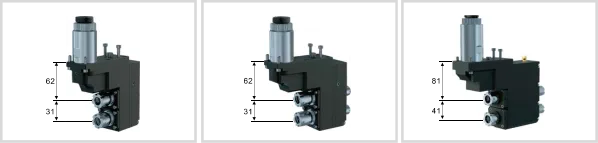
Sliding tools and turret combination
Multi-tool holders for simultaneous operations
Main spindle and sub-spindle integration
Rotating tool axes for complex geometries
Our swiss CNC lathe machine handles complete part processing:
Turning (external and internal)
Milling (face, side, and contour)
Drilling (axial, radial, and angled)
Tapping (internal and external threads)
Side milling for complex features
All in a single machining setup
Remcor invests significantly in customized solutions:
Large annual R&D budget for customer-specific applications
Flexible tool selection modules for different industries
Future-proof designs adaptable to evolving requirements
Turnkey solutions from application experts
Experience matters. Remcor's 20 years in CNC Swiss lathe manufacturing ensures:
Refined machining processes
Precision assembly techniques
Comprehensive quality inspection systems
Expert knowledge across industries
The guide bushing is critical for Swiss-type machining:
Supports parts at optimal distance from collet
Minimizes tailing material waste
Prevents deflection on thin, long components
Enables consistent precision across production runs
Different applications demand different tooling:
Remcor offers rich series of tool selection modules
Industry-specific configurations available
Custom tooling for unique requirements
Future expansion capabilities
Modern CNC Swiss lathes feature between 3 and 6 axes:
More axes = more operations per cycle
Complex parts machined complete
Reduced secondary operations
Faster overall production
Consider your production volume needs:
Automatic bar loading capabilities
Unmanned operation potential
Part unloading systems
Integration with robotics
Swiss-type lathes excel at medical components:
Surgical instruments
Implants and prosthetics
Dental components
Diagnostic equipment parts
Miniature connectors
Benefits: Biocompatible material expertise, micron-level precision, clean machining processes
High-volume precision parts:
Fuel injection components
Transmission parts
Sensor housings
Connector pins
Valve components
Benefits: Consistent quality, high production rates, cost efficiency
Critical components requiring absolute reliability:
Hydraulic fittings
Fasteners and connectors
Instrument components
Guidance system parts
Engine components
Benefits: Material versatility, traceability, certification support
Miniature precision parts:
Connector pins and contacts
Fiber optic components
Semiconductor manufacturing parts
Communication device components
Miniature shafts and pins
Benefits: Small part expertise, high-volume capability, tight tolerances
Honoring the Swiss lathe heritage:
Watch components
Jewelry findings
Precision decorative parts
Luxury item components
Benefits: Ultra-fine finish, exceptional accuracy, delicate part handling
Feature | Swiss-Type Lathe | Traditional CNC Lathe |
Best Part Length | Long, slender parts (30:1 L/D) | Shorter parts (3:1 L/D max) |
Guide Bushing | Yes | No |
Deflection Control | Excellent | Limited |
Simultaneous Operations | Multiple tools working together | Typically single tool |
Setup Complexity | Higher initial setup | Simpler setup |
Production Volume | High-volume long parts | Versatile volumes |
Part Complexity | Complete machining in one setup | May require multiple setups |
Tolerance Capability | ±0.0002" or better | ±0.0005" typical |
Ideal Part Diameter | 0.5mm - 32mm | 10mm - 300mm+ |
Swiss-type lathe technology continues to evolve:
Increased Automation
Lights-out manufacturing capabilities
Robotic part handling
Automated quality inspection
Predictive maintenance
Digital Integration
IoT connectivity for remote monitoring
Cloud-based data analytics
AI-powered optimization
Digital twin simulation
Enhanced Precision
Sub-micron positioning accuracy
Thermal compensation systems
Advanced vibration damping
Real-time error correction
Sustainability
Energy-efficient servo systems
Minimal coolant usage
Reduced material waste
Longer tool life
Remcor Technology continues to lead CNC Swiss lathe development:
Ongoing R&D investment in next-generation technologies
Customer-driven customization programs
Industry-specific solution development
Global service network expansion
20+ years specializing in Swiss-type lathes
Deep understanding of diverse industry requirements
Continuous improvement based on customer feedback
Knowledge transfer from two generations of expertise
Comprehensive quality inspection from machining to assembly
Strict material selection and verification
Precision manufacturing processes
Final testing and validation
Professional turnkey solutions from industry experts
Comprehensive training programs
Responsive after-sales service
Spare parts availability
Technical support hotline
Competitive pricing without quality compromise
High reputation in Chinese west and south markets
Exceptional repurchase rate
Long-term partnership approach
Part Analysis: Evaluate your components for Swiss lathe suitability
Volume Requirements: Determine production quantities and rates
Material Considerations: Identify materials to be machined
Tolerance Requirements: Define precision needs
Budget Planning: Establish investment parameters
Machine Selection: Choose appropriate Swiss-type lathe model
Tooling Configuration: Select optimal tool packages
Programming: Develop efficient machining programs
Installation: Professional setup and commissioning
Training: Comprehensive operator and programmer education
Production Launch: Gradual ramp-up with support
Start with well-suited parts (long, slender, complex)
Invest in quality tooling
Develop in-house expertise
Maintain preventive maintenance schedules
Leverage manufacturer support resources
The swiss CNC lathes has come a remarkable journey from Jakob Schweizer's 1870s watchmaking innovation to today's sophisticated multi-axis machining centers. This evolution reflects the enduring value of the Swiss-type concept: supporting workpieces close to the cutting action for unmatched precision on challenging parts.
Remcor Technology proudly continues this legacy, combining 20+ years of Swiss lathe manufacturing experience with modern technology and customer-focused innovation. Our SA series Swiss Type Lathe represents the culmination of this heritage, offering:
Precision: Guide bushing technology for minimal deflection
Productivity: Multi-axis, multi-tool simultaneous machining
Flexibility: Customizable configurations for diverse applications
Reliability: Proven design with comprehensive support
Value: Competitive pricing with exceptional quality
Whether you're producing medical implants, automotive components, aerospace fittings, or honoring the watchmaking tradition, Remcor's CNC Swiss lathes deliver the performance and reliability your business demands.
Contact Remcor Technology today to discover how our CNC Swiss lathe solutions can transform your manufacturing capabilities.
 English
 русский
 français
 Deutsch
 Español