Apr 11 , 2025
Discover how laser cutting equipment enhances manufacturing efficiency through high precision, fast processing, automation, and energy savings. Learn key benefits for improving productivity and reducing costs.
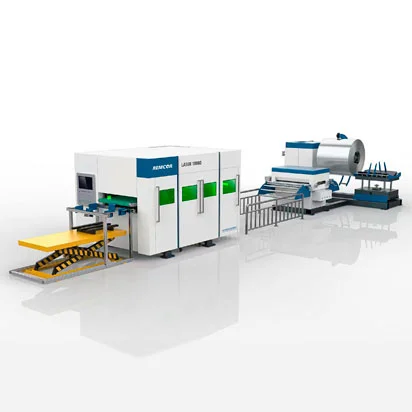
In modern manufacturing, improving efficiency remains a top priority for enterprises seeking to stay competitive. Among the many technologies available, laser cutting equipment has emerged as a powerful solution due to its precision, speed, flexibility, and automation capabilities. Below are the key ways laser cutting equipment significantly enhances manufacturing efficiency.
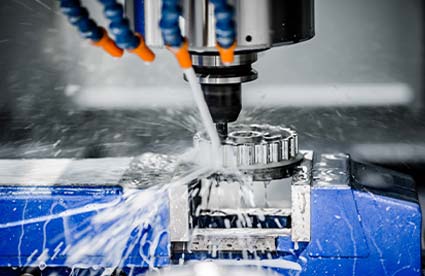
Laser cutting equipment is well known for its exceptional precision, often reaching micrometer-level accuracy. Compared to traditional mechanical cutting methods, this high level of precision ensures:
Consistent part dimensions
Minimal material waste
Reduced need for rework and corrections
In industries such as aerospace and automotive manufacturing, where tight tolerances are critical, laser cutting greatly improves both product quality and production efficiency.
Laser cutting machines operate at significantly higher speeds than conventional cutting technologies. This allows manufacturers to:
Complete complex cutting tasks in shorter timeframes
Increase output in mass production environments
Reduce overall production cycles
For example, in electronics manufacturing, where precision and speed are equally important, laser cutting ensures fast processing without compromising quality.
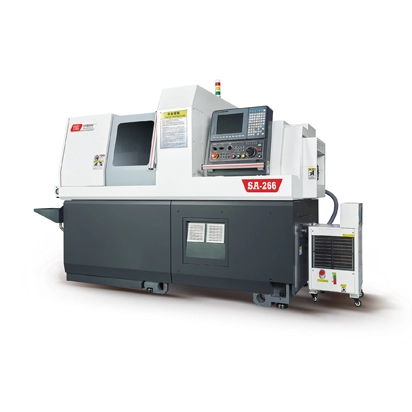
Modern laser cutting systems are highly automated and can be integrated into smart production lines. Key benefits include:
24/7 continuous operation
Reduced dependence on manual labor
Lower risk of human error
Real-time monitoring and process optimization
With advanced CNC systems, sensors, and software integration, laser cutting equipment enables stable, efficient, and intelligent manufacturing processes.
Laser cutting equipment offers unmatched flexibility in handling:
Different materials (steel, stainless steel, aluminum, etc.)
Various thicknesses
Complex shapes and designs
Without the need for tool changes, manufacturers can quickly switch between different production tasks, making laser cutting ideal for both mass production and customized manufacturing.
Although the initial investment may be higher, laser cutting equipment helps reduce long-term costs by:
Minimizing material waste
Reducing labor requirements
Lowering maintenance and rework costs
This results in improved cost efficiency and faster return on investment (ROI) for businesses.
Laser cutting technology is more energy-efficient and environmentally friendly compared to traditional methods. Advantages include:
Lower energy consumption
Reduced emissions and waste
Cleaner production environment
These benefits support sustainable manufacturing practices while also reducing operational expenses.
Laser cutting equipment plays a vital role in modern manufacturing by delivering high precision, speed, automation, and flexibility. By adopting this advanced technology, enterprises can significantly improve production efficiency, reduce costs, and enhance product quality.
As laser technology continues to evolve, its applications will expand even further, creating new opportunities for manufacturers to achieve smarter, greener, and more efficient production.
 English
 русский
 français
 Deutsch
 Español