How to Choose Laser Cutting Machine Manufacturers in China: A Practical Buyer's Guide
Introduction
China is now the world's largest manufacturer and exporter of fiber laser cutting, welding, and cleaning equipment. For buyers in North America, Europe, Southeast Asia, the Middle East, and beyond, sourcing laser machines from China offers significant cost advantages — but it also requires careful supplier evaluation.
With hundreds of companies claiming to be "leading manufacturers," how do you separate genuine manufacturers from trading companies? How do you verify quality? And what does the after-sales relationship really look like once the machine clears customs?
This guide answers all of those questions with a practical, no-nonsense framework for evaluating Chinese laser machine suppliers.
---
China's laser equipment industry didn't emerge by accident. Several structural advantages have combined to create a globally competitive manufacturing base:
1. Complete Domestic Supply Chain
China produces its own:
- **Fiber laser sources:** Raycus, MAX Photonics, JPT — now world-class and directly competitive with IPG Photonics
- **Laser cutting heads:** Raytools, BOCI, Precitec (German brand, China-manufactured)
- **CNC control systems:** CypCut (Friendess), Beckhoff-based custom systems
- **Motion systems:** high-precision linear guides, servo motors (Yaskawa, Delta, domestic brands)
This vertical integration means shorter lead times, better parts availability, and lower costs.
2. Wuhan: China's Laser Valley
Wuhan, Hubei Province is the undisputed center of China's laser industry. The city is home to:
- **Wuhan University** and **Huazhong University of Science & Technology** — two of China's top laser research institutions
- Raycus (fiber laser source manufacturer)
- Dozens of laser equipment manufacturers including **Remcor Technology**
The cluster effect means deep technical talent, specialized suppliers, and a culture of continuous innovation.
3. Scale and Competition
The intense domestic competition within China's laser industry forces continuous improvement in quality, features, and pricing — and that competition ultimately benefits international buyers.
4. Export Experience
Chinese laser manufacturers have been exporting globally for 15+ years. Leading companies have navigated CE certification, FDA registration, export logistics, and multilingual technical support — they know how to serve international customers.
---
The Difference Between a Manufacturer and a Trading Company
This is the single most important distinction when sourcing from China.
| Feature | Genuine Manufacturer | Trading Company |
|---|
| Factory ownership | Yes — own manufacturing facility | No — resells products |
| Technical knowledge | Deep | Limited |
| Customization | Possible | Rarely possible |
| Price | Factory-direct | Markup added |
| After-sales support | Direct responsibility | Dependent on real manufacturer |
| Problem resolution | Faster, direct | Slower, intermediated |
How to Verify a Manufacturer
1. **Ask for factory photos and videos** — and then do a reverse image search to check if the photos are stock images.
2. **Request a factory audit** (virtual or in-person). Legitimate manufacturers welcome it.
3. **Check their export history** on Chinese customs data platforms (ImportYeti, Panjiva).
4. **Look for specific technical knowledge** in their communications — can they answer detailed questions about laser parameters, machine configurations, and application requirements?
5. **Check business registration** on official Chinese databases (National Enterprise Credit Information Platform).
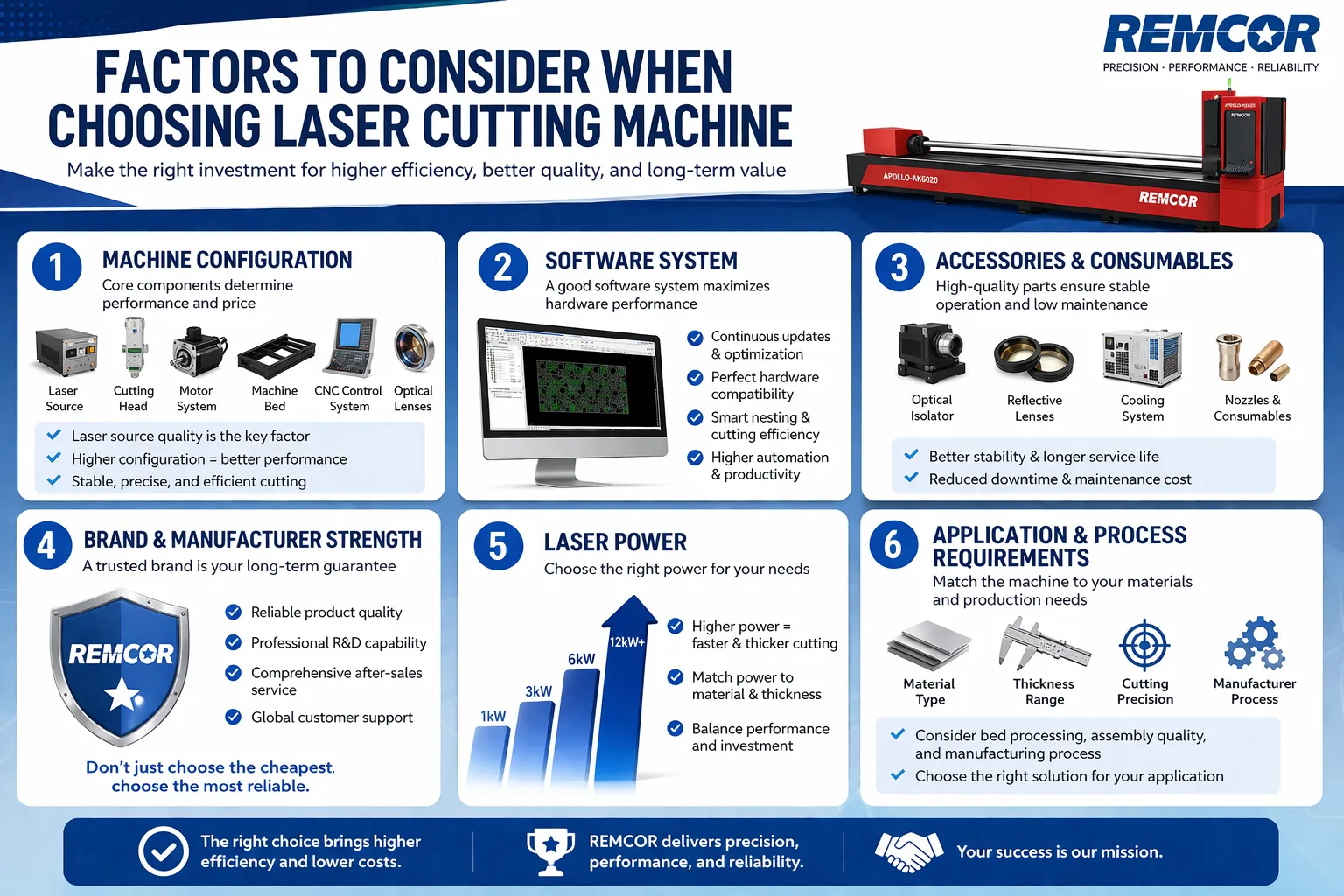
1. Years of Manufacturing Experience
Look for companies with **10+ years** of laser equipment production. The technology has evolved rapidly; experienced manufacturers have navigated multiple generations of machines.
2. Machine Installation Base
A company that has installed thousands of machines globally has proven its product reliability at scale. Ask for their total installation numbers and geographic distribution.
**Example:** Remcor Technology has installed 5,000+ machines across 40+ countries — demonstrable global proof of reliability.
3. Certifications
Verify the following based on your target market:
| Certification | Relevance |
|---|
| CE (EU Declaration of Conformity) | Required for European markets |
| FDA Registration | Required for US market |
| ISO 9001 | Quality management system |
| RoHS | Environmental / hazardous materials compliance |
| SGS Inspection | Third-party quality verification |
**Important:** Ask for actual certificates with certificate numbers — then verify them directly with the issuing body.
4. Laser Source Brands Available
Premium laser sources tell you about build quality:
- **IPG Photonics** (German-American) — the global benchmark, highest price
- **Raycus** (China) — top-tier Chinese brand, excellent performance/cost ratio
- **MAX Photonics** (China) — strong mid-range option
- **JPT** (China) — popular in mid-range and pulsed applications
Reputable manufacturers offer a choice; be cautious of suppliers who only have unknown-brand laser sources.
5. After-Sales Support Infrastructure
The machine sale is the beginning of the relationship. Evaluate:
- **Warranty duration** (industry standard: 1–2 years)
- **Number of dedicated service engineers** — the more the better
- **Remote diagnosis capability** — can they connect to your machine remotely?
- **Spare parts availability and shipping speed**
- **Training** — on-site, remote, or video training included?
- **Language support** — English, Spanish, Arabic, etc.
6. Customization Capability
A genuine manufacturer can configure machines to your specific needs:
- Custom table sizes
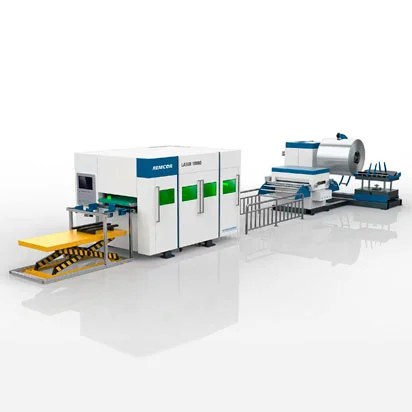
- Specific automation integrations (loading/unloading systems)
- Industry-specific tooling
- Special voltage or power configurations for your country
7. Sample Testing & Pre-Shipment Inspection
Before you pay in full, you should have the right to:
- Submit sample materials and receive cutting/welding test results
- Request a Factory Acceptance Test (FAT) — in-person or video
- Commission a third-party inspection (SGS, Bureau Veritas, TÜV)
Reputable manufacturers embrace this. Hesitation is a red flag.
8. Payment Terms & Logistics Support
Typical payment structure for international orders:
- **30% deposit** upon order confirmation
- **70% balance** before shipment (after pre-shipment inspection)
If customers have a lot of worries, we can also support the payment, so once have the real interest, we can one by one to have a discuss
Logistics support should include:
- Export packaging (wooden crates, moisture protection, anti-vibration)
- Export customs documentation (commercial invoice, packing list, certificate of origin, CE docs)
- Arrangement of freight (FOB, CIF, DDP options)
9. References from Existing Customers
Ask for **contact information of existing customers** in your country or region. A phone or video call with a real customer is worth more than any brochure.
10. Communication Quality
How a supplier communicates before the sale reflects how they'll communicate after. Evaluate:
- Response time to inquiries
- Technical depth of answers
- Clarity of proposals and quotations
- Willingness to answer difficult questions
---
Red Flags to Watch Out For
**Prices that seem impossibly low** — quality laser sources alone cost thousands of dollars; machines priced below market often use inferior components.
**Refusal to provide factory location or audit access** — legitimate manufacturers are transparent about their operations.
**No verifiable certifications** — claimed CE but can't provide actual documentation.
**Only accepts 100% payment upfront** — non-standard; creates no incentive to resolve post-delivery issues.
**Vague or template responses** — inability to answer specific technical questions suggests a trading company with limited product knowledge.
**No existing customer references** in your region — or references that can't be independently verified.
---
Why Buyers Choose Remcor Technology
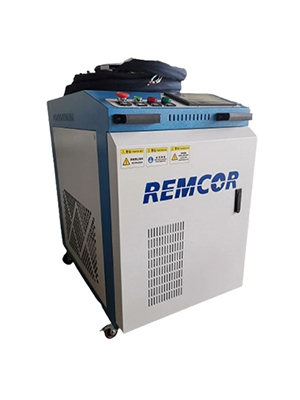
**Remcor Technology Co., Ltd.** (www.remcortechnology.com) is a Wuhan-based laser equipment manufacturer with a strong track record for international sales:
| Factor | Remcor Technology |
|---|
| Founded | Wuhan, China |
| Products | Laser cutting, welding, cleaning machines; CNC Swiss lathes; automated production lines |
| Power range | 1 kW – 30 kW fiber laser |
| Global installations | 5,000+ machines, 40+ countries |
| After-sales team | 20+ dedicated engineers |
| Certifications | CE, ISO |
| Customization | Yes — custom configurations available |
| Laser source options | Raycus, MAX, IPG (customer choice) |
| Sample testing | Yes — available before order |
| Warranty | 2 years (major components) |
Remcor's combination of competitive pricing, proven global delivery, and responsive technical support makes it a compelling choice for manufacturers worldwide.
---
Step-by-Step: How to Buy a Laser CNC cutting machine for sheet metal from China
1. **Define your requirements** — material type, thickness, cutting speed, automation needs, production volume
2. **Request quotes from 3–5 suppliers** — include all technical specs in your RFQ
3. **Verify manufacturer status** — factory audit, export records, certifications
4. **Request sample testing** — submit your actual materials; evaluate results objectively
5. **Compare total cost of ownership** — not just machine price, but shipping, duty, installation, training, consumables
6. **Negotiate payment terms** — standard split (30/70) is reasonable
7. **Commission pre-shipment inspection** — SGS or equivalent
8. **Arrange logistics** — CIF or DDP terms simplify international shipping for first-time importers
9. **Plan installation & training** — arrange technician visit or remote guidance
10. **Run acceptance testing** — verify machine performance before signing off
---
Frequently Asked Questions
**Q: Is it safe to buy a laser machine directly from a Chinese manufacturer?**
A: Yes, if you follow proper due diligence. Millions of dollars of laser equipment is imported from China successfully every year. The key is choosing verified manufacturers with export experience.
**Q: How long does it take to receive a laser cutting machine from China?**
A: Production lead time: 15–30 days. Shipping by sea: 20–45 days depending on destination. Allow 6–8 weeks from order to delivery for most markets.
**Q: Can I get installation support if I buy from China?**
A: Yes. Reputable manufacturers either send a technician or provide remote guidance (video call, documentation) for installation and commissioning.
**Q: What happens if the machine has problems after delivery?**
A: This is why after-sales infrastructure matters. Companies like Remcor provide remote diagnosis, spare parts shipping, and (if needed) on-site engineer visits within their warranty terms.
**Q: What duties and taxes apply when importing a laser machine?**
A: This varies by country and HS code classification of the machine. Work with a licensed customs broker in your country to determine applicable duties.
---
Conclusion
Buying a laser machine from China can deliver exceptional value — but only with the right supplier. By evaluating manufacturers on experience, certifications, after-sales support, and transparency, you dramatically reduce your risk and increase your probability of a successful long-term partnership.
**Remcor Technology** welcomes inquiries from buyers worldwide and is prepared to provide technical consultation, sample testing, and customized quotations for any laser cutting, welding, or cleaning requirement.


 English
 русский
 français
 Deutsch
 Español