The Ultimate Guide to Fiber Laser Cutting Machines: Everything You Need to Know in 2026
Meta Description:
Discover the ultimate 2026 guide to fiber laser cutting machines. Learn how they work, key components, advantages, costs, and how to choose the right system for your application.
Introduction
Whether you're running a metal fabrication shop, an automotive parts facility, or a custom sheet metal business, choosing the right **fiber laser cutting machine** can define your productivity and profitability for years to come.
In this comprehensive guide, we cover everything — from how fiber laser technology works, to what specs actually matter, to how to choose a reliable manufacturer. By the end, you'll have a clear picture of what to look for and why companies worldwide trust Chinese manufacturers like **Remcor Technology** for their laser cutting needs.
---
A fiber laser cutting machine uses a high-powered laser beam — generated through a fiber optic cable doped with rare-earth elements — to cut through metal and other materials with extreme precision. Unlike CO₂ lasers, fiber lasers offer:
- **Higher efficiency** (up to 30% wall-plug efficiency vs. ~10% for CO₂)
- **Lower operating costs** (no laser gas, fewer consumables)
- **Faster cutting speeds**, especially on thin metals
- **Longer lifespan** (typically 100,000+ hours for the laser source)
Fiber lasers are now the industry standard for **cutting steel, stainless steel, aluminum, copper, brass, and titanium**.
How Does a Fiber Laser Cutter Work?
1. **Laser Generation:** A diode pumps energy into a fiber optic cable doped with ytterbium. This produces a highly focused, monochromatic beam.
2. **Beam Delivery:** The beam travels through the fiber cable to a cutting head, which focuses it to a tiny spot (typically 0.1–0.3 mm).
3. **Material Interaction:** The focused beam melts, burns, or vaporizes the workpiece material.
4. **Assist Gas:** Nitrogen, oxygen, or air blows the molten material away through the kerf (cut channel).
5. **Motion Control:** A CNC system moves the cutting head (or the material) to follow the programmed cutting path.
---
Key Specifications to Evaluate
When shopping for a fiber laser cutting machine, these are the specs that truly matter:
### 1. Laser Power (Watts/Kilowatts)
| Power | Best For | Max Cutting Thickness (Steel) |
|-------|----------|-------------------------------|
| 1kW – 2kW | Thin sheet metal, light fabrication | Up to 10mm |
| 3kW – 6kW | Medium fabrication, general industry | Up to 20mm |
| 8kW – 12kW | Heavy industry, structural steel | Up to 35mm |
| 15kW – 30kW | Ultra-thick plate, industrial mass production | Up to 80mm+ |
**Remcor Technology** offers fiber laser cutting machines from **1kW all the way to 30kW**, ensuring there is a solution for every production need.
2. Working Area (Bed Size)
Common formats include:
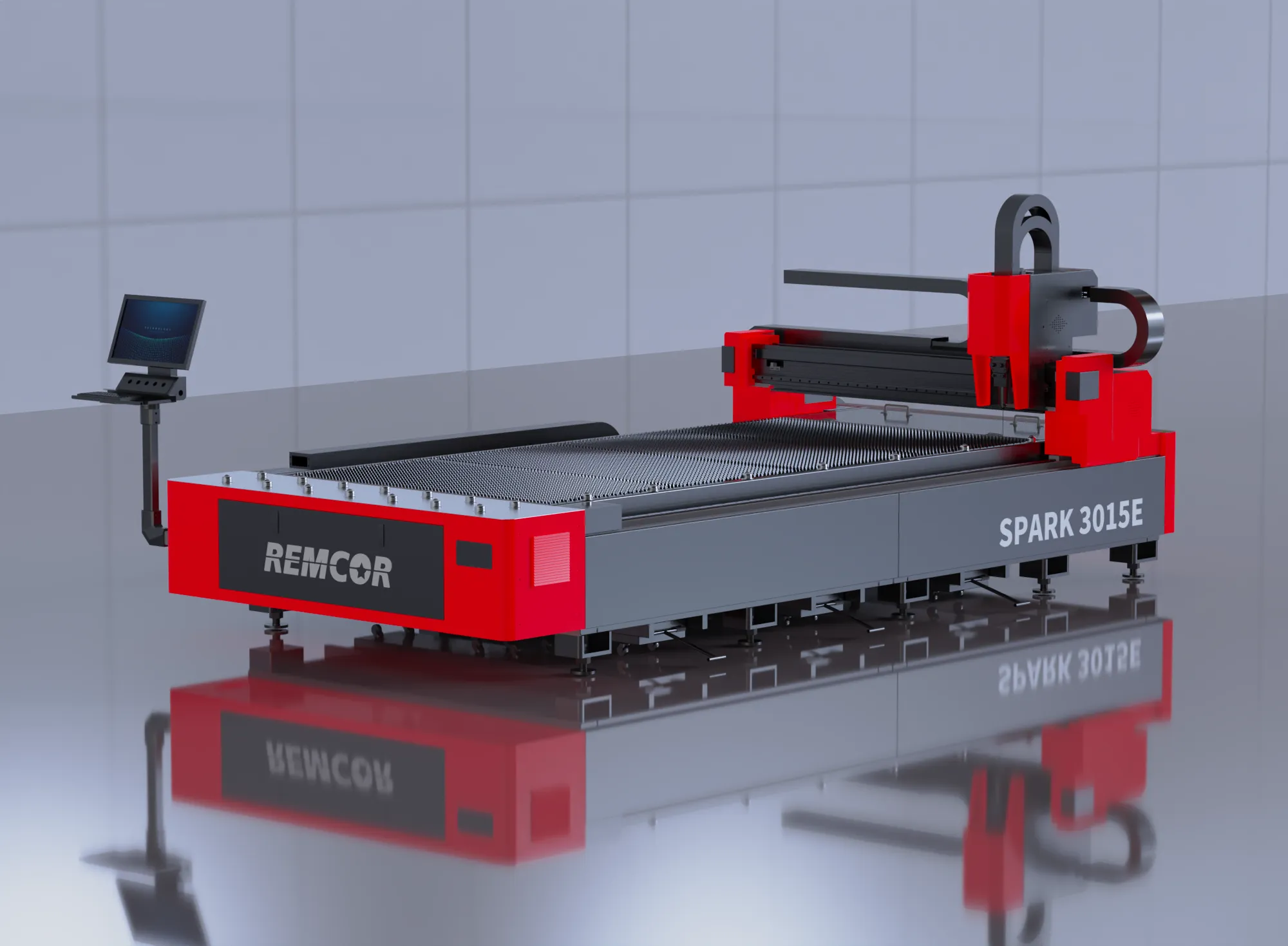
- **3015** (3000 × 1500 mm) — most popular for general fabrication
- **4020** (4000 × 2000 mm) — large-format sheet metal
- **6020** (6000 × 2000 mm) — structural and shipbuilding
3. Positioning Accuracy
High-quality machines achieve:
- Positioning accuracy: ±0.03 mm
- Repeatability: ±0.02 mm
4. Cutting Head
Leading cutting heads (e.g., Raytools, Precitec, BOCI) offer:
- Auto-focus capability
- Anti-collision protection
- Real-time height sensing
5. Control System
Look for established CNC systems such as:
- **CypCut** (popular in China-made machines)
- **Beckhoff**
- **PA8000**
---
Types of Fiber Laser Cutting Machines
The most common type, designed for flat plate cutting. Available in standard and large-format configurations.
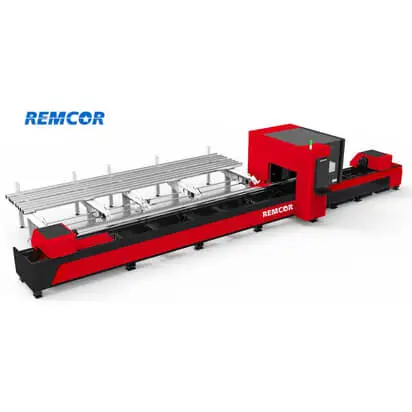
Dedicated machines for cutting round, square, rectangular, and custom profile tubes. Essential for furniture, fitness equipment, and automotive parts manufacturing.
A dual-purpose machine that handles both flat sheets and tubes — ideal for manufacturers who work with both forms regularly.
Full coil-to-part systems that integrate uncoiling, leveling, feeding, punching, and laser cutting into a single automated workflow — enabling **24-hour unmanned production**.
---
Fiber Laser vs. CO₂ Laser: Which Should You Choose?
| Factor | Fiber Laser | CO₂ Laser |
|--------|------------|-----------|
| Cutting Speed (thin metal) | 3–5× faster | Slower |
| Operating Cost | Low | Higher (gas, optics) |
| Reflective Metals (brass, copper) | Excellent | Difficult |
| Maintenance | Minimal | More frequent |
| Non-metal Cutting | Limited | Good (acrylic, wood) |
| Initial Cost | Moderate–High | Lower (entry level) |
**Verdict:** For any metalworking application, fiber laser is the clear winner in 2026. CO₂ is only relevant if you're cutting non-metallic materials.
---
Top Industries Using Fiber Laser Cutting
Fiber laser cutting machines serve a wide range of industries:
- **Automotive & EV Manufacturing:** Precision body panels, chassis components, battery enclosures
- **Aerospace:** Titanium and aluminum structural parts
- **Construction & Architecture:** Steel beams, decorative facades, curtain wall components
- **Shipbuilding:** Large steel plate cutting, hull panels
- **Agricultural Equipment:** Tractor frames, implement housings
- **Medical Devices:** Surgical instruments, device enclosures
- **Consumer Electronics:** Enclosures, brackets, heatsinks
- **Fitness Equipment:** Steel tube frames for gym machines
---
How to Choose a Fiber Laser Cutting Machine Manufacturer
Choosing the right supplier is just as important as choosing the right machine. Here's what to evaluate:
✅ Manufacturing Experience
Look for companies with 10+ years of laser equipment manufacturing experience. Remcor Technology has been developing laser cutting systems since its founding in Wuhan, China — one of China's laser technology hubs.
✅ Global Installation Base
A supplier with thousands of machines installed globally indicates proven reliability. Remcor has installed **5,000+ machines across 40+ countries**.
✅ After-Sales Support
Don't overlook post-sale service. Key questions:
- Do they have local service engineers?
- What's the response time for technical issues?
- Are spare parts readily available?
Remcor maintains **20+ dedicated after-sales engineers** to ensure fast support globally.
✅ Certifications
Ensure the manufacturer holds:
- **CE Certification** (EU markets)
- **ISO 9001** Quality Management
- **FDA** registration (for US market)
✅ Customization Capability
Can they configure machines to your specific workflow? Remcor specializes in **custom automation solutions** tailored to each customer's production requirements.
---
Fiber Laser Cutting Machine Price Guide (2026)
Prices vary widely based on power and configuration:
| Configuration | Estimated Price Range (USD) |
|---------------|---------------------------|
| 1kW–2kW entry-level | $8,000 – $18,000 |
| 3kW–6kW mid-range | $18,000 – $45,000 |
| 8kW–12kW high-power | $45,000 – $90,000 |
| 15kW–30kW ultra-high power | $90,000 – $250,000+ |
| Tube cutting combo | +$10,000 – $30,000 premium |
| Automated coil-fed lines | $150,000 – $500,000+ |
*Note: Prices are approximate and subject to change. Chinese manufacturers typically offer 30–50% lower prices than European equivalents with comparable quality.*
---
Why Buy a Fiber Laser Cutting Machine from China?
China has become the world's largest producer of fiber laser cutting machines for good reason:
1. **Cost Advantage:** Chinese manufacturers offer highly competitive pricing without sacrificing quality.
2. **Complete Supply Chain:** China produces its own laser sources (Raycus, MAX, JPT), cutting heads, and CNC components — reducing lead times.
3. **Proven Technology:** Chinese laser manufacturers have been exporting globally for 15+ years.
4. **Rapid Innovation:** R&D investment is high; new power classes and automation features are released frequently.
Wuhan, in particular, is known as **"China's Laser Valley"** — home to companies like Raycus (fiber laser sources) and a dense ecosystem of laser equipment manufacturers, including Remcor Technology.
---
Frequently Asked Questions (FAQ)
**Q: What materials can a fiber laser cutting machine cut?**
A: Steel (mild, stainless, galvanized), aluminum, copper, brass, titanium, nickel alloys, and other metals. Fiber lasers are not ideal for non-metals like wood or acrylic.
**Q: How long does a fiber laser source last?**
A: Quality fiber laser sources (Raycus, MAX, IPG) are rated for 100,000+ hours of operation — equivalent to over 11 years of continuous use.
**Q: What's the difference between 1kW and 6kW fiber laser?**
A: Higher power means faster cutting speeds and the ability to cut thicker materials. For thin sheets (≤6mm), even a 3kW machine is very fast. For plates above 20mm, you'll want 8kW or above.
**Q: Do I need special training to operate a fiber laser cutter?**
A: Basic CNC operation skills are required. Most suppliers provide operator training. Modern machines with user-friendly control software (like CypCut) have a gentle learning curve.
**Q: How do I get a quote for a fiber laser cutting machine?**
A: Contact Remcor Technology at [www.remcortechnology.com](https://www.remcortechnology.com) with your material type, thickness range, and production volume requirements for a customized quote.
---
Conclusion
Fiber laser cutting technology has transformed metal fabrication — delivering speed, precision, and versatility that no other cutting technology can match. Whether you need a compact 1kW machine for a small shop or a 30kW heavy-duty system for industrial-scale production, choosing the right machine and the right manufacturer is critical.
**Remcor Technology** — based in Wuhan, China — offers a full lineup of fiber laser cutting machines, tube cutters, and automated production lines, backed by global installation experience and dedicated technical support.

 English
 русский
 français
 Deutsch
 Español