Jul 01 , 2023
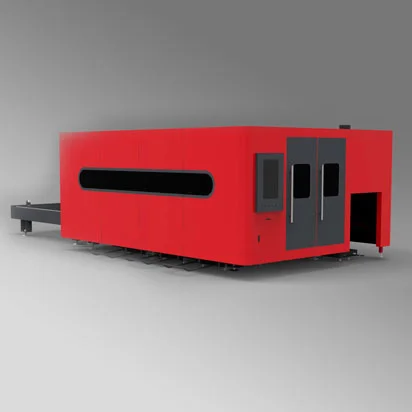
In modern manufacturing and fabrication, precision, efficiency, and flexibility are critical to maintaining competitiveness. As technology continues to evolve, so do the tools that enable higher productivity and better quality. Among these innovations, industrial laser cutters have emerged as a transformative solution, widely adopted across industries for their superior performance.
This article outlines the key technological advancements that have accelerated the adoption of industrial laser cutting systems.
Industrial laser cutting technology originated in the 1970s. Early systems were:
Large and complex
Expensive to operate
Limited to large-scale manufacturers
With continuous technological progress, modern laser cutters have become:
More compact and energy-efficient
Cost-effective for small and medium-sized enterprises
Easier to operate and maintain
Result: Laser cutting has transitioned from a niche technology to a mainstream manufacturing solution.
One of the most significant breakthroughs is the development of fiber laser technology.
Uses solid-state fiber instead of gas (as in CO₂ lasers)
Higher energy conversion efficiency
Reduced maintenance requirements
Faster cutting speeds
Superior precision and edge quality
Capability to process various materials (steel, aluminum, copper, etc.)
Lower operating costs
Impact: Fiber lasers have become the industry standard, significantly driving adoption across metal fabrication sectors.
The development of Computer-Aided Design (CAD) and Computer-Aided Manufacturing (CAM) software has revolutionized how laser cutting machines are used.
3D product design and modeling
Process simulation before production
Automatic nesting and toolpath optimization
Reduced material waste
Improved production accuracy
Faster setup and turnaround time
Enhanced automation of workflows
Impact: CAD/CAM integration enables smarter, more efficient production with minimal human error.
The rise of Industry 4.0 has further accelerated the adoption of industrial laser cutters.
Internet of Things (IoT)
Artificial Intelligence (AI)
Machine Learning (ML)
Real-time data monitoring systems
Real-time machine performance tracking
Predictive maintenance
Automated production optimization
Improved product consistency and quality
Impact: Laser cutting machines are now part of fully connected, intelligent manufacturing ecosystems.
Modern laser cutting systems are no longer standalone machines—they are part of automated production lines.
Robotic loading and unloading systems
Vacuum lifters for sheet handling
Automated storage and retrieval systems
Conveyor-based production lines
Reduced labor dependency
Higher production efficiency
Consistent output quality
Improved workplace safety
Impact: Automation enhances scalability and supports high-volume production demands.
The widespread adoption of industrial laser cutters is the result of continuous technological advancements. Key innovations—including fiber laser technology, CAD/CAM software, Industry 4.0 integration, and automation—have transformed laser cutting into a highly efficient, precise, and versatile manufacturing solution.
As these technologies continue to evolve, industrial laser cutters will play an even greater role in shaping the future of manufacturing, enabling businesses to achieve higher productivity, lower costs, and superior product quality.
 English
 русский
 français
 Deutsch
 Español