English
 русский
 français
 Deutsch
 Español
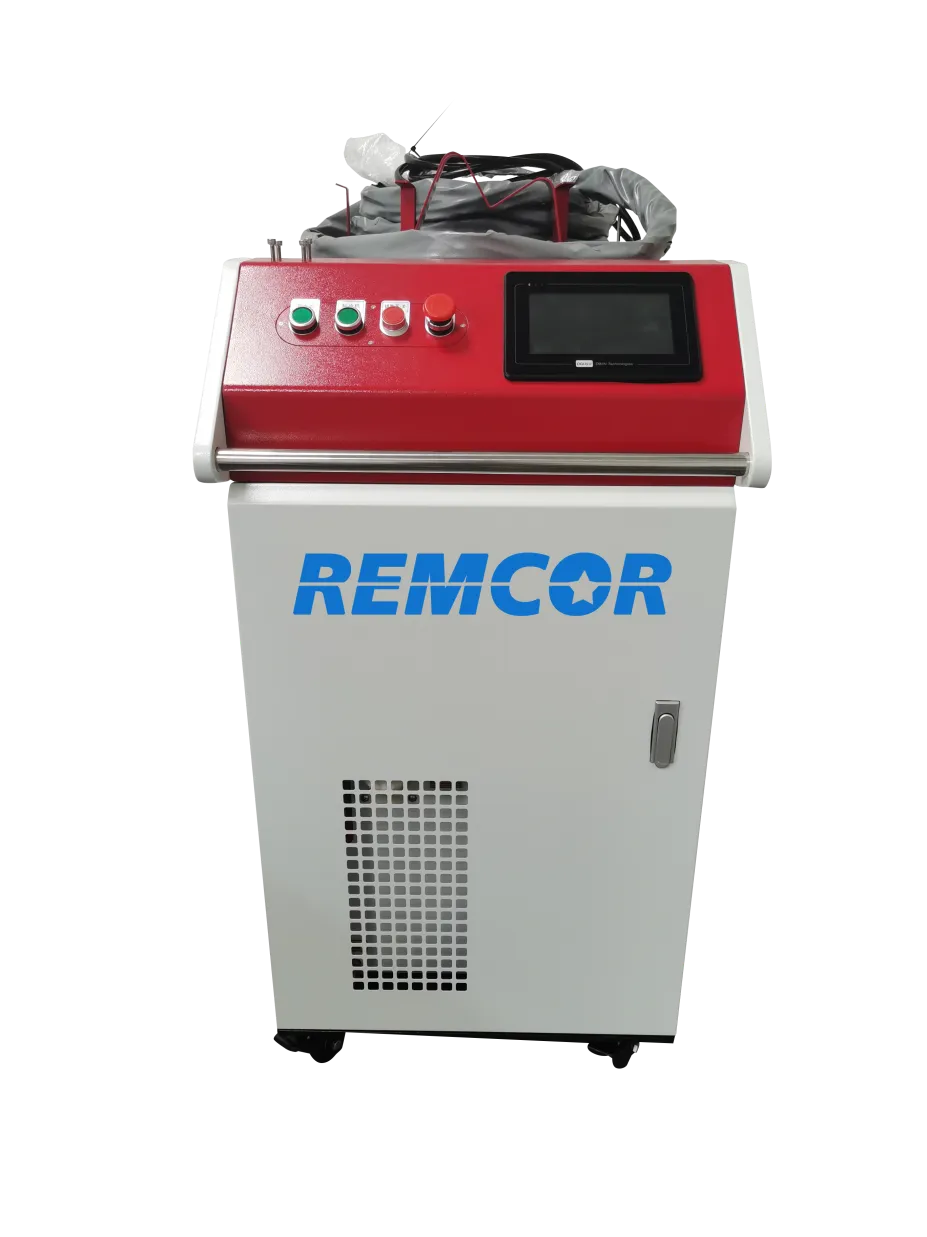
Fiber laser welding machines, along with a versatile hand laser welding machine, provide deep penetration, high strength, and minimal deformation.


Feb 06 , 2026
Meta Description:
What can a fiber laser machine do? This complete guide covers fiber laser cutting, welding, and cleaning applications, key benefits, and how to choose the right system for your needs.
Fiber laser machines have become one of the most important industrial laser technologies in modern manufacturing. Thanks to their high efficiency, low maintenance cost, long service life, compact structure, and excellent beam quality, fiber lasers are now widely used in metal cutting, welding, cleaning, marking, engraving, cladding, and surface treatment across many industries.
In this article, we will systematically explain what fiber lasers can do, starting from the basic laser principle, moving to fiber laser types, functions, industrial applications, and finally limitations of fiber laser technology.
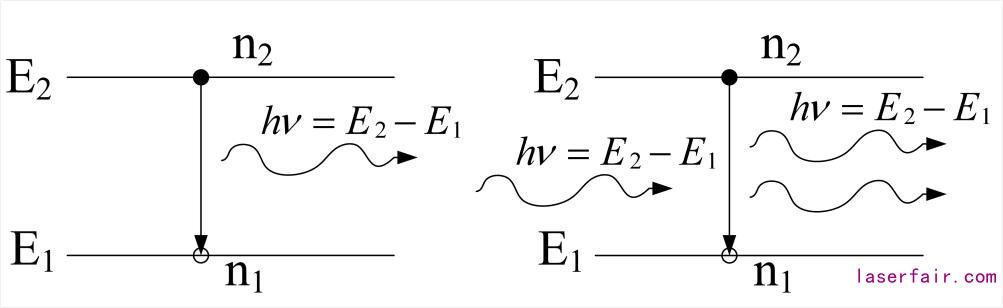
Laser technology is based on the fundamental concept of stimulated emission, first proposed by Albert Einstein in 1916.
Spontaneous Emission (Left) and Stimulated Emission (Right) In the diagram, the two horizontal lines E2 and E1 represent the energy levels of electrons. The higher the line, the higher the energy of the electron (similar to a higher VIP level). On the left, in spontaneous emission, an electron transitions from a higher energy level to a lower energy level and emits a photon whose energy equals the difference between the two energy levels. On the right, stimulated emission occurs under the influence of an external photon, causing the electron to emit another photon that is exactly identical to the incident one. This is what is meant by “stimulated.” Here we add that hν represents the energy of a single photon, where h is Planck’s constant (which we do not need to focus on here), and ν is the frequency of the light. The frequency directly determines the color of the light we see. Each frequency corresponds to a specific color. The table below lists the frequency and wavelength ranges of visible light. We can see that from red, orange, yellow, green, cyan, blue to violet, the frequency of light gradually increases. This is why in daily life, the higher the temperature of a light source, the more its color shifts toward blue.
As mentioned earlier, stimulated emission is a process in which an external light field induces the emission of a photon that is completely identical to the original one. This incoming photon may come from spontaneous emission or may be an artificially injected seed photon. In any case, once it enters, it will leave together with an identical “twin.” Being “identical” means that the two photons are indistinguishable — essentially a process of copying and amplification. If mirrors are placed at the output of this process, the two photons are reflected back and undergo stimulated emission again, becoming four photons. Repeating this process continuously, the number of photons increases exponentially, and eventually a laser is formed.
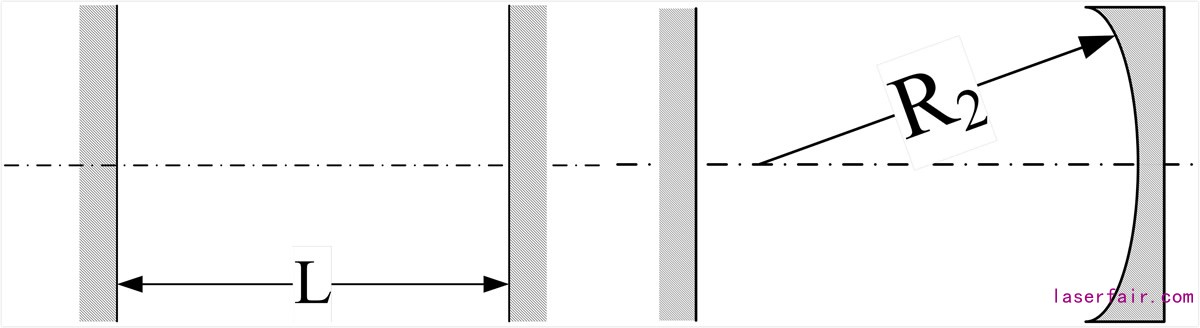
Every laser system consists of three essential parts:
The material that produces laser light. In fiber lasers, this is rare-earth-doped optical fiber, such as:
Ytterbium (Yb)
Erbium (Er)
Thulium (Tm)
Provides energy to excite electrons. Usually high-power laser diodes in fiber lasers.
Two mirrors form a cavity where photons bounce back and forth, undergoing continuous stimulated emission and amplification.
One mirror is fully reflective, the other partially reflective. The transmitted light becomes the laser output beam.
Continuous energy output
Used for cutting, deep welding, cladding
Short pulse duration
Used for marking, engraving, micromachining
Combination of CW and pulse
Ideal for spot welding and battery welding
Low power: 20W – 200W
Medium power: 300W – 3000W
High power: 3000W – 60000W
Fiber laser cutting source
Fiber laser welding source
Fiber laser cleaning source
Fiber laser marking source
Fiber laser engraving source
Fiber laser cladding / hardening source
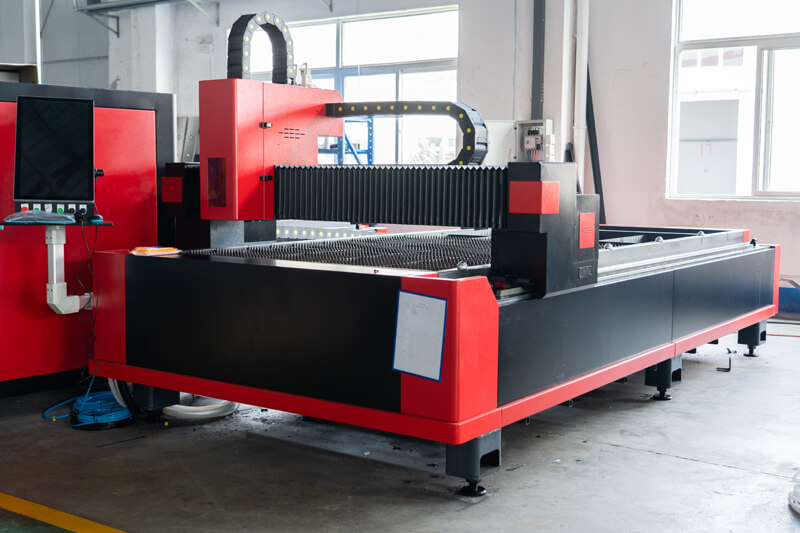
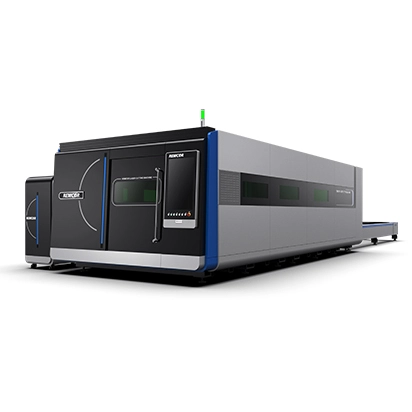
Fiber laser cutting machines, sourced from a reputable laser cutter factory, are mainly used for metal sheet and tube processing.
Common materials:
Carbon steel
Stainless steel
Aluminum
Brass
Copper
Titanium
Advantages:
Extremely high cutting speed
Narrow kerf width
High precision
Excellent edge quality
Fully CNC controlled
No tool wear
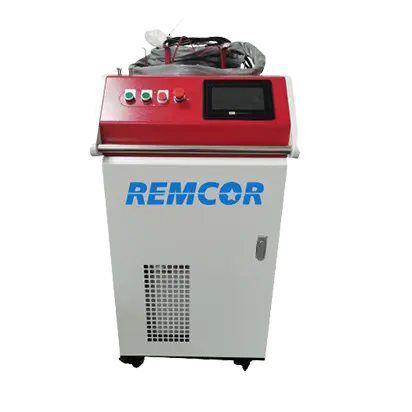
Fiber laser welding machines, along with a versatile hand laser welding machine, provide deep penetration, high strength, and minimal deformation.
Applications:
Sheet metal welding
Battery pack welding
Automotive body welding
Handheld laser welding
Jewelry welding
Advantages:
Small heat affected zone
No filler wire required
High welding consistency
Easy robot integration
Suitable for automation lines
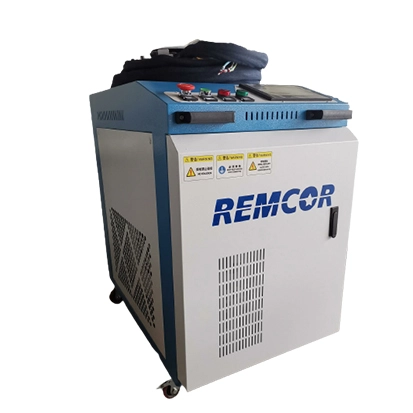
Fiber laser cleaning, available as a reliable laser rust removal machine for sale, is a green surface treatment technology that replaces chemical and sandblasting methods.
Used for:
Rust removal
Paint stripping
Oil and grease removal
Oxide layer cleaning
Mold cleaning
Surface pre-treatment before welding
Advantages:
Non-contact
No chemicals
No abrasives
Environmentally friendly
No damage to base material
Fiber laser marking machines are used for permanent identification and traceability.
Applications:
Serial numbers
QR codes
Logos
Barcodes
Date codes
Anti-counterfeiting
Advantages:
Permanent marking
High contrast
No ink or consumables
Extremely low maintenance
Long lifespan
Sheet metal fabrication
CNC machining centers
Tool and mold making
Car body cutting
Battery welding
Component marking
PCB marking
Semiconductor packaging
Smartphone components
Surgical instruments
Medical device marking
Titanium cutting
Precision welding
Lithium battery welding
Solar panel processing
Fiber lasers perform poorly on:
Wood
Acrylic
Glass
Fabric
CO₂ lasers are better for non-metals.
Copper, brass, and gold can cause back reflection, potentially damaging the laser source without isolation protection.
High-power systems require:
High capital cost
Skilled operators
Stable power supply
Fiber lasers mainly produce black/gray marks. UV lasers are better for color marking.
Fiber laser machines have become the core equipment of Industry 4.0, replacing traditional mechanical and thermal processing methods.
With advantages such as:
High energy efficiency
Long service life
Low operating cost
High automation compatibility
Excellent processing quality
fiber lasers are now the best industrial solution for metal cutting, welding, cleaning, marking, engraving, and surface treatment.
For companies seeking:
Higher productivity
Lower labor cost
Higher precision
Better product consistency
Fiber laser technology is the future of intelligent manufacturing and smart factories.