Jun 14 , 2026
Pattern Programming & Parameter Setting: Import 3D workpiece models or grayscale texture images into supporting software. Operators set laser power, pulse frequency, scanning speed and texture depth, and the system automatically generates optimized machining paths for flat or curved surfaces.
Laser Beam Transmission & Focusing: The laser source emits pulsed high-energy laser beams. The galvanometer system realizes high-speed beam deflection, while the dynamic focusing module automatically adjusts focal length to adapt to uneven 3D curved surfaces and mold cavities.
Precision Laser Ablation: The focused laser beam acts on the workpiece surface. Materials are removed via thermal ablation, remelting or direct sublimation. Ultrafast laser minimizes thermal impact on workpieces to avoid deformation and edge burning.
Automatic Dust Removal & Inspection: Built-in fume purification system removes processing dust in real time. High-end models adopt visual online detection system to compare finished textures automatically and ensure full batch consistency.
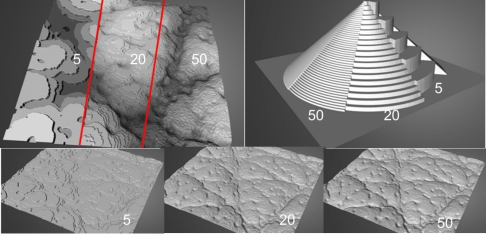
Micron-level Ultra-high Precision: Achieves consistent micro-textures with sharp edges without burrs. It supports ultra-fine optical microstructures that cannot be completed by traditional processes.
Zero Tool Wear & Low Maintenance Cost: Non-contact laser processing requires no physical cutting tools. There is no tool wear or workpiece surface scratch, greatly reducing daily maintenance expenses.
Eco-friendly & Pollution-free: No chemical liquids, sand materials or hazardous waste are used. It meets global industrial environmental protection standards and eliminates hazardous waste disposal costs.
Unlimited Design Freedom: Supports gradient textures, irregular patterns and deep-cavity mold texturing. Any customized texture can be realized only by updating digital drawings.
Low Thermal Impact & No Workpiece Deformation: Pulsed laser works instantly with small heat-affected zone, suitable for thin-wall parts and high-precision molds without secondary polishing.
Excellent Batch Consistency: Full digital program control ensures identical texture effects for mass production, perfectly matching automated production lines.
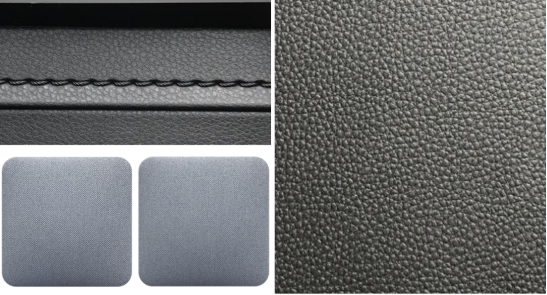
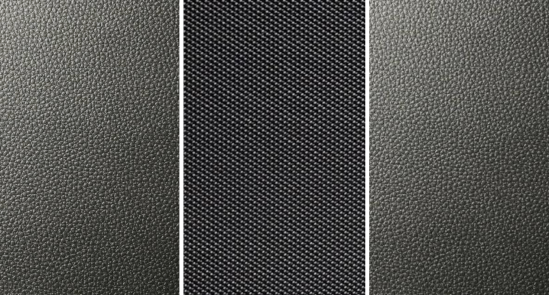
Mold Manufacturing Industry (Core Application): Replace chemical etching for automotive interior molds, home appliance molds, tire molds and daily product molds, solving uneven grain and high scrap rate problems of traditional mold texturing.
Automotive Manufacturing: Process anti-slip textures for mechanical parts, optical anti-glare textures for automobile lamps, and matte surface textures for interior components to improve both functionality and appearance.
Consumer Electronics: Surface decorative textures for mobile phone frames and laptop shells, anti-reflection microstructures for camera modules to promote product hand feeling and optical performance.
Medical Devices: Osseointegration micro-textures on orthopedic implants and anti-slip textures for surgical instruments to improve medical safety and implantation stability.
Packaging & Cosmetics Industry: Exquisite decorative textures and invisible anti-counterfeiting micro-patterns for cosmetic bottle caps and plastic packaging products.
Hardware & Watch Industry: High-precision decorative grains including Geneva grain and perlage grain for watch dials and luxury hardware parts.
Entry-level 2D flat laser texturing machine: $8,000 - $25,000
Mid-range 3-axis 3D laser texturing machine for regular molds: $30,000 - $80,000
High-end 5-axis ultrafast laser texturing machine for precision micro-processing: $100,000 - $350,000
European Premium Brands: GF Machining Solutions (Switzerland, global leader in laser mold texturing)
TRUMPF (Germany, top industrial laser brand), 3D-Micromac (Germany, professional in micro-nano surface structuring)
High-precision Synchronization Control for Complex Curved Surfaces: For deep-cavity molds and irregular 3D surfaces, real-time focal length compensation and multi-axis linkage synchronization are difficult to control, easily causing uneven texture depth and pattern distortion.
Complicated Parameter Matching for Different Materials: Metals, plastics and ceramics have different laser absorption rates. It requires massive process databases to adapt to new materials, leading to long debugging cycles.
Splicing Seam Defects for Large-area Workpieces: Large-size workpieces need segmented processing. Poor algorithm design will lead to obvious splicing traces and texture discontinuity.
High Procurement and Maintenance Cost of Ultrafast Laser: Picosecond and femtosecond laser sources mainly rely on imports, resulting in high overall equipment cost, limiting the promotion among small and medium manufacturers.
High Professional Threshold for Texture Programming: Professional CAM software requires operators to master both mold structure knowledge and laser process technology, resulting in a shortage of professional technical personnel in the industry.
Laser Power Drift During Long-term Operation: Continuous long-time operation causes slight laser power attenuation. Without real-time power compensation system, finished texture depth will gradually deviate.
Q1: Is laser texturing better than chemical etching?
A1: Yes. Laser texturing is eco-friendly, higher precision and more stable in batch production without hazardous waste.
Q2: Can laser texturing machines process all metal molds?
A2: Yes. It supports all mold steel, copper and aluminum molds, covering flat surfaces, curved surfaces and deep cavities.
Q3: How long is the service life of a laser texturing machine?
A3: The laser source service life exceeds 100,000 hours, and the whole machine can work stably for 8-10 years with daily maintenance.
This is the first one.
 English
 русский
 français
 Deutsch
 Español