Handheld Laser Welding Machine: The Complete Buyer's Guide for 2026
Introduction
The **handheld laser welding machine** has revolutionized metal joining across industries — from stainless steel kitchens and custom furniture to automotive repair and structural metalwork. In just a few years, this technology has gone from a niche innovation to a mainstream must-have tool for metal fabricators worldwide.
If you're evaluating whether a handheld laser welder is right for your business — or comparing models and suppliers — this guide gives you an unbiased, comprehensive breakdown of everything that matters.
---
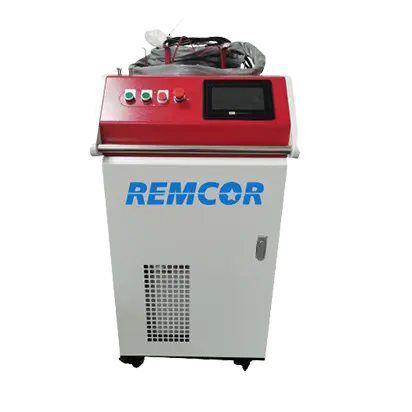
A handheld laser welding machine is a portable welding device that uses a **fiber laser beam** to fuse metal joints. Unlike traditional MIG, TIG, or arc welding:
- **No filler rod or electrode** is required (for autogenous welding)
- **No sparks or spatter** in most applications
- **Minimal heat-affected zone** — less distortion and warping
- **Beautiful, smooth weld beads** right out of the machine — often needing no post-weld grinding
- **Operable by workers with minimal training** — most operators are productive within hours
The result is faster throughput, lower labor costs, and higher-quality finished products compared to conventional welding methods.
---
How Handheld Laser Welding Works
1. **Laser Source:** A fiber laser (typically 1000W–3000W) generates a high-intensity infrared beam (1064nm wavelength).
2. **Delivery:** The beam is delivered through a flexible fiber optic cable to a lightweight hand-held gun.
3. **Welding Nozzle:** The operator places the nozzle against the joint and pulls the trigger.
4. **Shielding Gas:** Argon, nitrogen, or a mixed gas protects the weld pool from oxidation.
5. **Wire Feed (Optional):** For gap-filling or buildup, a wire feeder can be attached.
6. **Result:** The laser melts and fuses the base metals in a single, controlled pass.
---
Handheld Laser Welder vs. Traditional Welding Methods
| Feature | Handheld Laser | TIG Welding | MIG Welding | Arc Welding |
|---------|---------------|-------------|-------------|-------------|
| Welding Speed | Very Fast | Slow | Medium | Medium |
| Weld Appearance | Excellent | Excellent | Good | Fair |
| Post-weld Cleanup | Minimal | Minimal | Moderate | Heavy |
| Skill Required | Low | Very High | Medium | Medium |
| Heat Input / Distortion | Very Low | Low | Medium | High |
| Material Thickness Range | 0.5mm – 8mm | 0.5mm – 5mm | 1mm – 12mm | 3mm – 20mm+ |
| Operating Cost | Low | Medium | Medium | Low |
**Key Insight:** The handheld laser welder wins on weld quality, speed, and operator accessibility — making it the best choice for **thin-to-medium gauge metals** where appearance and precision matter.
---
What Materials Can a Handheld Laser Welder Handle?
Handheld laser welders work exceptionally well on:
- **Stainless Steel** — The #1 application; clean welds with no discoloration
- **Carbon Steel / Mild Steel** — Fast and effective
- **Galvanized Steel** — With proper settings and ventilation
- **Aluminum** — Requires higher power; excellent results with proper technique
- **Copper & Brass** — Possible with experienced operators
- **Titanium & Nickel Alloys** — Excellent with inert gas shielding
**Not recommended for:**
- Cast iron (prone to cracking)
- Very thick plates (>10mm) — use a robotic welding system instead
---
Key Specifications Explained
Laser Power
The most important spec. Typical ranges:
| Power | Best For |
|-------|----------|
| 1000W (1kW) | Thin sheets 0.5–3mm, jewelry, light fabrication |
| 1500W | Most popular all-round option; covers 0.5–5mm |
| 2000W | Thicker steel, faster speeds, gap-filling |
| 3000W | Heavy-duty fabrication, thick stainless, aluminum |
Welding Modes
Premium machines offer multiple modes:
- **Continuous wave (CW)** — High speed, deep penetration
- **Pulsed mode** — Less heat, ideal for thin sheets and precision work
- **Wobble welding** — Oscillating beam for wider, stronger welds on gaps
Wire Feeder
An integrated wire feeder allows you to fill gaps up to 3–5mm without pre-fit-up perfection — a huge advantage in real-world fabrication.
Cooling System
- **Water-cooled systems** are required for all industrial-grade handheld welders — they protect the laser source and maintain stable output.
Gun / Handpiece Design
Look for:
- Ergonomic grip for extended use
- Lightweight gun (<1.5 kg)
- Multiple nozzle options (straight, 90°, inner corner, outer corner)
- Safety sensor — laser only fires when nozzle contacts the workpiece
---
Top Applications for Handheld Laser Welding
1. Stainless Steel Kitchens & Cabinetry
One of the most popular use cases. Laser welding produces mirror-finish welds on stainless steel sinks, countertops, shelving, and kitchen equipment — dramatically reducing polishing time.
2. Doors, Windows & Metal Furniture
Steel and aluminum door frames, window profiles, and furniture frames benefit from the clean, straight welds that require minimal finishing.
3. Automotive & EV Battery Repair
Body panel repair, battery module housing welding, exhaust components, and structural brackets.
4. Fitness Equipment
Steel tube frames for gym machines (treadmills, weight racks, cable machines) are a perfect fit for handheld laser welding.
5. HVAC & Piping
Thin-wall stainless steel ducts, pipes, and fittings — industries where cleanliness and corrosion resistance are critical.
6. Signage & Display
Decorative metalwork, signage frames, and display stands with complex geometries.
7. Elevator & Escalator Components
Panels and structural parts where appearance and strength both matter.
---
A growing trend is the **3-in-1 all-in-one laser machine** that combines:
- **Handheld laser welding**
- **Handheld laser cleaning** (rust, paint, oxide removal)
- **Handheld laser cutting** (thin sheet trimming)
This multi-function approach maximizes ROI, especially for small-to-medium shops. **Remcor Technology** offers 3-in-1 systems that are popular with custom fabricators, metal art studios, and maintenance shops.
---
How to Evaluate a Handheld Laser Welding Machine Supplier
Experience & Certifications
Your supplier should hold:
- **CE Certification** for European markets
- **ISO 9001** Quality Management
- Proven export history and testimonials
After-Sales Service
Critical questions:
- Is training included?
- What is the warranty period? (Standard: 1–2 years; look for 2-year guarantees)
- Are spare parts (nozzles, protective lenses, wire tips) readily available?
- Is remote technical assistance available?
Sample Welding Demonstration
Always request a **sample video or live demo** of the machine welding your specific material and thickness before purchasing.
---
Handheld Laser Welder Price Guide (2026)
| Configuration | Estimated Price (USD) |
|---------------|----------------------|
| 1000W basic handheld welder | $2,500 – $5,000 |
| 1500W standard with wire feeder | $4,000 – $8,000 |
| 2000W with wobble welding | $6,000 – $12,000 |
| 3000W heavy-duty | $10,000 – $18,000 |
| 3-in-1 Weld/Clean/Cut combo | $5,000 – $15,000 |
*Prices from Chinese manufacturers are typically 40–60% lower than European or North American equivalents of comparable specifications.*
---
Why Remcor Technology Handheld Laser Welders Stand Out
**Remcor Technology** (www.remcortechnology.com) manufactures handheld laser welding machines designed for demanding production environments:
- ✅ Available in 1kW, 1.5kW, 2kW, and 3kW configurations
- ✅ Integrated wire feeder available
- ✅ Wobble welding mode for maximum gap tolerance
- ✅ Ergonomic, lightweight gun design
- ✅ Water-cooled for continuous 24-hour operation
- ✅ Compatible with Raycus, MAX, and IPG laser sources
- ✅ CE certified, shipped to 40+ countries
- ✅ 2-year warranty on major components
---
Frequently Asked Questions
**Q: Is a handheld laser welder safe to use?**
A: Yes, with proper safety equipment — laser safety goggles rated for 1064nm, protective clothing, and adequate ventilation. The laser only fires when the nozzle is in contact with the workpiece, providing a key safety interlock.
**Q: Can a beginner use a handheld laser welder?**
A: Absolutely. Most operators reach productive welding capability within 1–4 hours of training. The learning curve is far shorter than TIG welding.
**Q: How thick can a 1500W handheld laser welder cut?**
A: 1500W is suited for welding metals up to approximately 5mm thick. For cutting, the handheld nozzle accessory can cut thin sheets (typically up to 3mm).
**Q: Do I need shielding gas?**
A: Yes, for quality welds on stainless steel and aluminum, argon or nitrogen is required. For mild steel, compressed air may be acceptable in less critical applications.
**Q: What is the typical welding speed?**
A: For 2mm stainless steel, expect 60–120 cm/min depending on power level and settings — roughly 5–10× faster than TIG welding.
---
Conclusion
The handheld laser welding machine is no longer a luxury for large factories — it's a practical, accessible tool that delivers genuine ROI for metal fabricators of all sizes. With the right machine and supplier, you gain faster throughput, better weld quality, and reduced labor costs.
**Remcor Technology** is a trusted source for handheld laser welders at competitive pricing, with global shipping and comprehensive after-sales support.


 English
 русский
 français
 Deutsch
 Español